DPO Radio
ACTIVE
ISO/IEC 27701:2025 Privacy Information Management
Voluntary, published 14 October 2025.
Plan your PIMS scope and Statement of Applicability against the 2025 edition's clause and control numbers, beside your personal data protection programme.

ISO/IEC 27701 is the international standard for a privacy information management system, or PIMS. It is written for organisations that act as a controller of personal data, a processor, or both.
The second edition was published on 14 October 2025 and replaces the 2019 edition. It is a stand-alone management system standard: it no longer extends ISO/IEC 27001, although many organisations run the two systems together.
The standard is voluntary. An accredited certification body audits a PIMS and issues the certificate. No authority receives a filing under it, and it sets no fine. How certificates against the 2019 edition move to the 2025 edition is decided by certification and accreditation bodies; ask yours.
No Vietnamese national standard (TCVN) adopting ISO/IEC 27701 was found in the national standards catalogue when it was searched on 9 November 2026.
A PIMS helps you run your PDPL programme. It does not replace it. The Personal Data Protection Law (Law 91/2025/QH15) does not require ISO/IEC 27701. Its duties stay with you whether or not you hold a certificate.
You still prepare records of processing, notices, consent records, responses to data subject requests and breach notifications under the Law. Where the Law requires them, you still file impact assessment and cross-border transfer dossiers with the authority, in the form and procedure Decree 356/2025/NĐ-CP sets.
What the standard adds is a management system around that work: a defined scope, named roles, a risk treatment plan, a Statement of Applicability, internal audit and management review. A certificate against the standard is not compliance with the Law.
The same holds for the EU GDPR. Implementing the standard helps you organise and evidence a GDPR programme. A certificate against it is not a GDPR certification unless a scheme built on it is approved under the Regulation.
Beside ISO/IEC 27001. Each control in Table A.3 carries the title of an ISO/IEC 27001:2022 Annex A control, so evidence you collect for one often serves the other.
| Provision | What It Covers | Operational Implication |
|---|---|---|
| Clauses 4.1 and 4.2 | Context and interested parties | Record whether you act as a controller, a processor or both, and why |
| Clause 4.3 | Scope of the PIMS | State what the PIMS covers, where it meets what it does not cover, and what is excluded |
| Clause 5.3 | Roles, responsibilities and authorities | Name who owns privacy decisions and who approves them |
| Clauses 6.1.2 and 6.1.3 | Privacy risk assessment and risk treatment | Keep the treatment plan that your Statement of Applicability follows |
| Clauses 9.2 and 9.3 | Internal audit and management review | Plan audits and reviews of the PIMS and keep their results |
| Clause 10.2 | Nonconformity and corrective action | Track each finding to a corrective action |
| Annex A, Table A.1 (31 controls) | Controls for controllers | Applies where you decide why and how personal data is processed |
| Annex A, Table A.2 (18 controls) | Controls for processors | Applies where you process personal data on a customer's instructions |
| Annex A, Table A.3 (29 controls) | Controls for both roles | Applies whichever role you hold |
The standard sets no deadline of its own. Any date that binds you on personal data comes from the law that applies to you.
| Item | Date | Reference |
|---|---|---|
| ISO/IEC 27701:2025 published, second edition | 14 October 2025 | ISO open-data record of the edition |
The standard prescribes no official form. ComplianceOne provides two templates of its own, built on the edition's numbering:
| Template | Official ID | Purpose | Used For |
|---|---|---|---|
| PIMS Statement of Applicability | None — a ComplianceOne template | Every Annex A control, applicable or excluded, with the justification for each decision, an owner and an approver | Clause 6.1.3 |
| PIMS Scope Statement | None — a ComplianceOne template | Boundaries, interfaces and exclusions of the PIMS | Clause 4.3 |

A Statement of Applicability is only as good as its justifications. Every decision, applicable or excluded, carries the reason it was made.

The controller and processor tables stay apart, so a processor's requirement list does not show the controller controls unless it records that role too.

Your PIMS work sits beside the personal data protection records the Law asks for, not in a separate spreadsheet.

Installed on its own. Install the ISO/IEC 27701 standards pack from the Market Packs catalogue. Adding the Vietnam market or a sector overlay does not bring it.
Every requirement by its number. Regulatory Frameworks then lists the 30 management-system sub-clauses of clauses 4 to 10 and all 78 Annex A controls. Each carries its identifier, its title as a row label and ComplianceOne's own guidance on what organisations usually put in place and what evidence shows it, in English and Vietnamese.
Your Statement of Applicability, control by control. The PIMS Statement of Applicability lists all 78 controls in their three tables. Each needs a disposition and a justification, whether the control is applicable or excluded, before the form is submitted. The owner and the approver are people in your workspace.
Controller and processor controls. Table A.1 controls apply when your organisation records that it acts as a controller; Table A.2 controls apply when it records that it acts as a processor. You record your role in your organization profile, under Roles your organization holds in processing personal data. Until a role is recorded, both tables wait for it. A controller-only organisation usually excludes Table A.2 in its Statement of Applicability, giving that reason.
Records of processing checked against the standard. Once the standard is installed, the records-of-processing completeness check offers an ISO/IEC 27701 view. Its findings are informational.
Related frameworks named. Framework Detail lists ISO/IEC 27001:2022, the Personal Data Protection Law and the EU GDPR as related frameworks.
The standard stays with you. ComplianceOne shows identifiers, short row labels and its own guidance, not the text of the clauses and controls, so you work from your own copy of the standard. ComplianceOne does not certify anyone against ISO/IEC 27701, and ISO has not approved or endorsed it. It is not legal advice.
 Compliance Forms
Holds your Statement of Applicability and scope statement as drafts until you submit them
Explore Compliance Forms Data Mapping
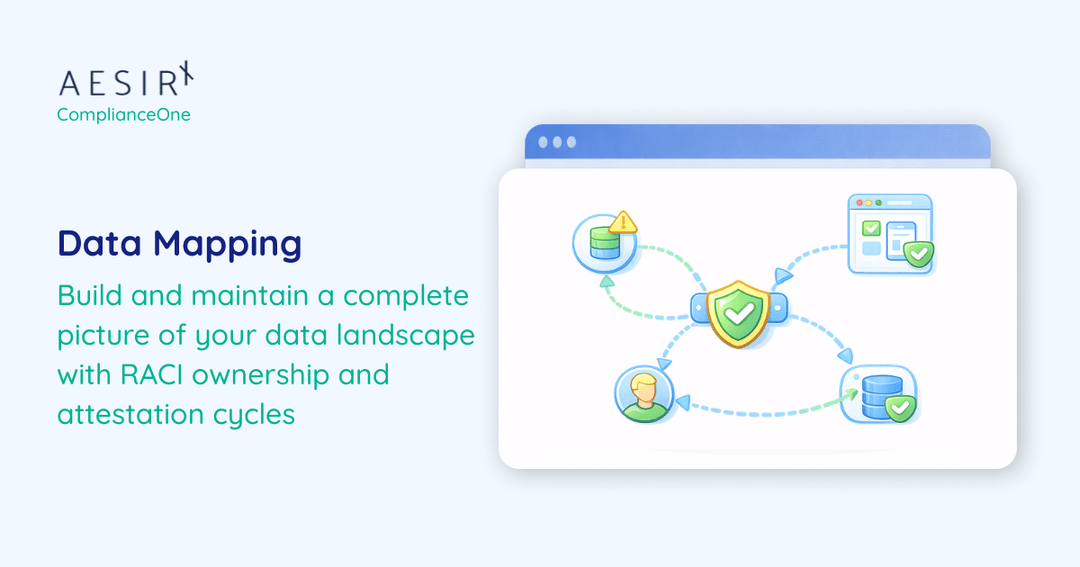
Keeps the records of processing that the controller and processor controls rely on
Explore Data Mapping Program Governance
Holds your privacy policy and procedures as approved documents with review dates
Explore Program GovernanceOrganisations implementing ISO/IEC 27701:2025 should confirm:
See how ComplianceOne lists each clause and Annex A control and how a Statement of Applicability records each decision with its justification.

Ronni K. Gothard Christiansen - Technical Privacy Engineer & CEO
Technical Compliance Expert, 32+ Years Open Source Advocate, X-BoD Open Source Matters Inc.
No. The Law does not require it. A PIMS can help you organise the work the Law asks for, but the Law's duties apply whether or not you hold a certificate. The Law names no management-system standard; for biometric data it asks for relevant international standards to be followed (Article 31(4)(a)) without naming one.
No. The second edition is a stand-alone management system standard. Many organisations still run it beside ISO/IEC 27001.
No. ComplianceOne shows each clause and control by its number with guidance of its own. You read the requirement in your own copy of the standard.
No. An accredited certification body audits and certifies a PIMS. ComplianceOne helps you prepare and keep the evidence.
Table A.2 holds the controls for processors and Table A.3 the controls for both roles. Table A.1 is for controllers.

Install the ISO/IEC 27701 standards pack and record your PIMS scope and Statement of Applicability beside your PDPL records.

Talk through how a PIMS fits your controller and processor roles.


The evolution of Aesir is Aesir +  (the Norse symbol for Necessity)"Needed in order to achieve a particular result"
♥Join the AesirX Privacy Newsletter. Stay Informed. Stay Compliant.
 Audit Trail