

DPO Radio
 Decree 224/2026/NĐ-CP - [ACTIVE]
Manage digital-transformation strategies and plans, online public services, digital-system requirements, procurement and leasing, and controlled experimentation with accountable evidence.

Decree 224/2026/NĐ-CP is the active implementing decree under the Law on Digital Transformation (Law 148/2025/QH15). It was issued by the Government of Vietnam on 24 June 2026 and took effect on 1 July 2026, aligned with the law. The decree comprises nine chapters and 92 articles.
The decree details specified articles and implementation measures of the Law on Digital Transformation, including digital-transformation strategies, programs, and plans; online information provision; online public services; architecture, design principles, and minimum requirements for digital systems; state-budget expenditure and allocation between central and local budgets; investment, procurement, and leasing of digital services; controlled experimental development using state-budget capital; and digital-economy and digital-society development.
Specific article numbers, official form IDs, and detailed timelines are confirmed against the official decree text before being presented as binding. Personal data, cybersecurity, electronic transactions, telecommunications, AI, and electronic identity remain governed by their own legislation.
The Law on Digital Transformation remains the horizontal parent framework and source of the primary principles. Decree 224 supplies the substantive implementing detail and procedural evidence needed to put those principles into practice, it is the active implementing layer.
Decision 268/QĐ-TTg is the official implementation plan for the law, a planning and coordination instrument, not the main compliance framework and not a separate customer-facing page. Decree 224 is the active child implementing decree.
| Area | Operational Requirement | Evidence to Maintain |
|---|---|---|
| Strategies, programs, and plans | Track digital-transformation strategies, programs, and plans with owners and milestones | Strategy/program record, approval and milestone evidence |
| Online information | Govern information published in the digital environment | Publication scope, owner, accuracy/update controls, retention |
| Online public services | Classify full-process versus partial services and prepare service evidence | Service inventory, partial-service justification, e-form and notification evidence |
| Electronic forms and data reuse | Apply electronic forms and the once-only data-collection principle | Field-to-source mapping, data-reuse record, auto-fill and traceability evidence |
| Online payment and digital signatures | Prepare online payment and digital-signature readiness where required | Online payment record, digital-signature readiness record |
| Digital-system requirements | Record architecture, design principles, and minimum requirements | Architecture record, minimum-requirements checklist, remediation log |
| Procurement and leasing | Manage investment, procurement, and leasing of digital services | Procurement/leasing record, vendor due-diligence, contract evidence |
| Controlled experimentation | Run controlled experimental development with safeguards and closure | Experiment scope, approval, monitoring and closure evidence |
| Digital economy and society | Track digital-economy and digital-society initiatives | Initiative inventory, governance and readiness evidence |
The platform provides internal ComplianceOne templates for strategy and plan records, online information, public-service inventory, full/partial service assessment, partial-service justification, electronic-form readiness, data reuse and once-only records, online payment and digital-signature readiness, status notifications, digital-system architecture and minimum requirements, procurement and leasing, controlled experiments, digital-economy and digital-society initiatives, and a compliance dossier checklist.
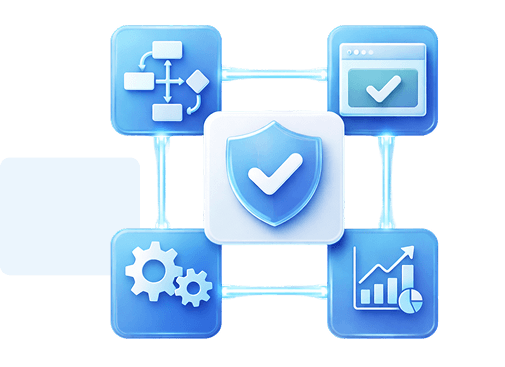
ComplianceOne structures each digital-transformation obligation as governed work with linked evidence. Strategies, programs, and plans carry owners, approvals, milestones, budgets, and implementation evidence, with links to the Decision 268 implementation plan where relevant.
Online public services run as readiness workflows; service classification, partial-service justification, electronic forms, once-only data reuse, online payment, digital-signature readiness, status notifications, and proactive-service level assessment. Digital-system records capture architecture, design principles, minimum requirements, interoperability, accessibility, and related implementation evidence, with remediation tracking. Procurement and leasing, and controlled experimental development, carry due-diligence, approval, monitoring, and closure evidence.
Where an obligation touches personal data, cybersecurity, electronic transactions, telecommunications, AI, or electronic identity, ComplianceOne connects the relevant evidence through cross-links instead of duplicating those frameworks. Every action is captured in a tamper-evident audit trail with contributor lineage. Human approval remains required for formal evidence and submissions, including where Forseti AI assists with analysis or drafting.
 Program Governance
Coordinates strategies, programs, plans, owners, and implementation-plan review.
Explore Program Governance Data Mapping
Maps digital systems, minimum requirements, data reuse, and cross-framework links.
Explore Data Mapping Compliance Forms
Manages MPS supplement request loops for breach notification filings (Mau so 08, which follows Decree 356 but not a Decision 778 procedure).
Explore Compliance Forms Vendor Governance
Supports digital-service procurement, leasing, and vendor due diligence.
Explore Vendor GovernanceSee how ComplianceOne connects digital programs, online public services, digital-system requirements, procurement, and controlled experimentation evidence.

Ronni K. Gothard Christiansen - Technical Privacy Engineer & CEO
Technical Compliance Expert, 32+ Years Open Source Advocate, X-BoD Open Source Matters Inc.
Decree 224 is active. It was issued on 24 June 2026 and took effect on 1 July 2026 as the implementing decree under the Law on Digital Transformation.
No. Decision 268/QĐ-TTg is the official implementation plan for the law, a planning and coordination instrument. Decree 224/2026/NĐ-CP is the active implementing decree that organizations comply with.
No. Decree 224 is an implementing decree, not a sanctions decree, so no fine amounts are presented for it. ComplianceOne focuses on readiness and evidence.
Not yet. ComplianceOne provides internal operational templates. Official form IDs are presented only after the official decree text or appendix is verified.
Its online public-service and state-budget provisions are most directly relevant to public-sector bodies and to entities that build or operate public-service digital systems. Private-sector organizations use those areas as reference or cross-framework guidance unless they deliver digital services for public agencies, while the digital-system, procurement, digital-economy, and digital-society provisions apply more broadly.

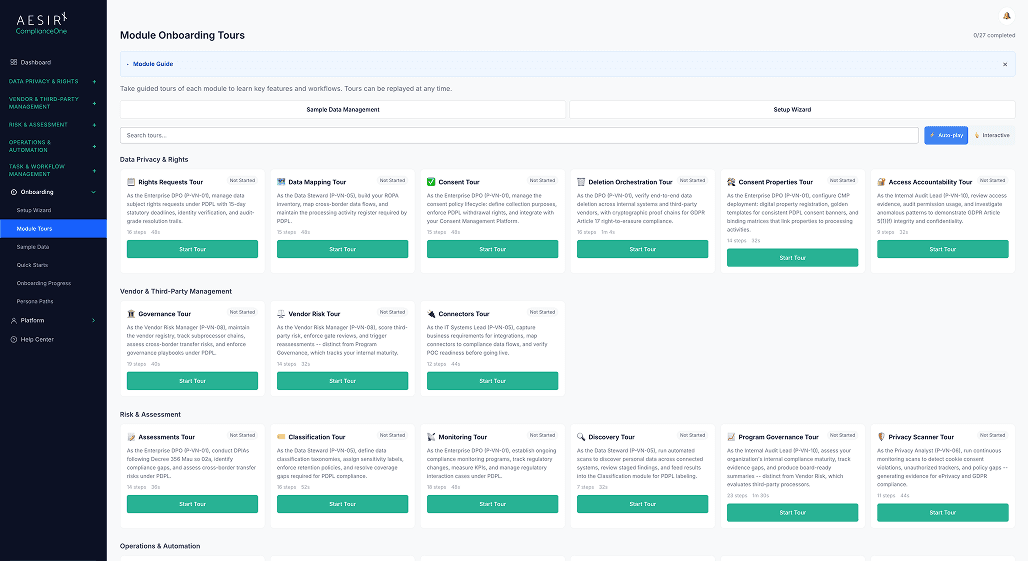
Test digital-transformation programs, online public services, digital-system requirements, and procurement workflows with your team.

Review your Decree 224 scope, operational evidence, and implementation-plan readiness.


The evolution of Aesir is Aesir +  (the Norse symbol for Necessity)"Needed in order to achieve a particular result"
♥Join the AesirX Privacy Newsletter. Stay Informed. Stay Compliant.
 Audit Trail