
DPO Radio
 SMART FACTORY OT OVERLAY [ACTIVE]
Connect industrial assets, data flows, monitoring, remote access, integrations, and incidents without inventing a standalone law.

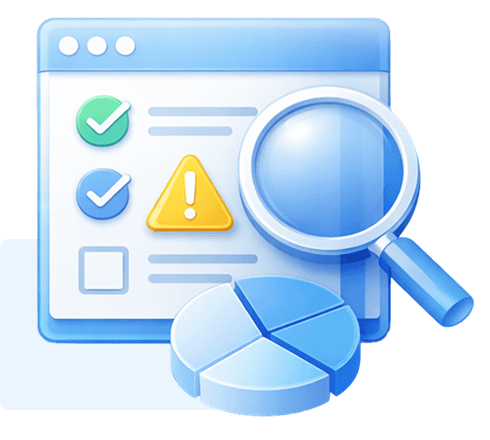
Smart factories bring operational technology, industrial IoT, production systems, cloud services, worker monitoring, vendors, and AI into the same operating environment. The resulting evidence can fall across several Vietnam legal frameworks rather than one dedicated “smart factory law.”
This AesirX evidence overlay is not legislation and creates no independent legal obligation. It helps manufacturing teams connect operational records to installed privacy, data, cybersecurity, AI, digital-transformation, telecommunications, identity, and product-quality frameworks.
Organizations with relevant smart-factory systems can install it directly. Reference-only mode supports evaluation without activating evidence reviews or score contribution.
Not legislation. This AesirX evidence overlay creates no independent legal obligation; it derives from and cross-links the Personal Data Protection Law, Data Law, Cybersecurity Law, AI Law, Digital Transformation Law, Telecommunications Law, the draft e-ID/e-Authentication Law, and the Product Quality and Traceability overlay.
Smart factories and operators of OT systems, IIoT systems, industrial control systems, manufacturing AI systems, and worker-monitoring systems.
PLC, SCADA, MES, ERP, sensors, robots, production lines, network zones, and integrations.
Production, machine, sensor, quality, maintenance, digital-twin, personal, and monitoring data.
Worker CCTV, biometrics, access, location, productivity, and behavior-monitoring records.
Vendor maintenance, remote-access paths, cloud dependencies, approvals, monitoring, and revocation.
Quality inspection, safety, predictive maintenance, robotics, worker monitoring, and automated control.
Segmentation, access, logging, vulnerabilities, backups, response, recovery, and incident evidence.
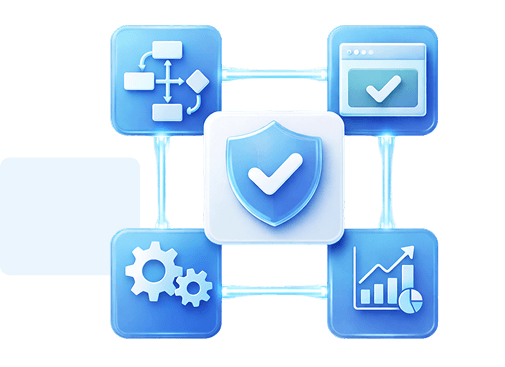
Teams can build a connected asset and data inventory, recording plant, line, zone, ownership, criticality, integrations, and data categories. Worker-monitoring records cross-link personal-data processing to the relevant privacy evidence.
Vendor and cloud records help document purpose, approvals, access paths, safeguards, monitoring, and revocation. AI screening and cybersecurity records connect each system to the applicable underlying review rather than duplicating legal obligations.
 Incident Response
Connects affected assets, data, vendors, response, and recovery.
Explore Incident Response

 OT assets and data flows are documented in separate systems.
 Maintain shared OT, IIoT, integration, and data context.Worker monitoring is reviewed outside plant operations.Cross-link privacy, AI, vendor, and cybersecurity evidence.Vendor access lacks a connected approval and revocation history.Connect incidents to affected assets, data, providers, and controls.AI and cybersecurity reviews cannot reuse asset context.Preserve each underlying legal framework’s separate status.
Worker-monitoring records (CCTV, biometrics, access, and behavior data) link directly to the personal-data evidence already governed under Vietnam's privacy frameworks, so a plant doesn't keep a second, disconnected file for the same processing.

Vendor remote-access approvals, monitoring, and revocation stay attached to the OT asset a technician touched, so a security review can trace exactly which vendor reached which line and when access ended.

An AI system used for quality inspection or predictive maintenance connects to the same screening and cybersecurity evidence as the OT asset it runs on, so plant, AI, and security reviews reuse one record instead of three.
See how ComplianceOne connects industrial assets to privacy, data, vendor, AI, and cybersecurity records.

Ronni K. Gothard Christiansen - Technical Privacy Engineer & CEO
Technical Compliance Expert, 32+ Years Open Source Advocate, X-BoD Open Source Matters Inc.
No. It is an AesirX evidence overlay that helps teams organize records across applicable installed legal frameworks.
No. Deadlines and prescribed procedures remain governed by the relevant underlying legal framework.
Yes. Working records connect CCTV, biometrics, access, location, productivity, and behavior monitoring to the relevant personal-data evidence.
Yes. Teams can record purpose, approvals, access path, authentication, time window, monitoring, revocation, and supporting evidence.
No. It contains only organization-prepared evidence records. Verified government forms remain in their underlying regulatory framework.

Map one plant’s OT assets, data, vendors, monitoring, AI, and cybersecurity evidence.

Review plant scope, installed frameworks, evidence sources, and accountable system owners.


The evolution of Aesir is Aesir +  (the Norse symbol for Necessity)"Needed in order to achieve a particular result"
♥Join the AesirX Privacy Newsletter. Stay Informed. Stay Compliant.
 Data Mapping
 Vendor Governance
 Risk Assessment
 Audit Trail