DPO Radio
DPO Advisor Persona
Owns DPIAs, RoPA, transfers, breach notifications, and rights requests. Works over the regulatory frameworks your organisation has installed and the privacy records your role can read.


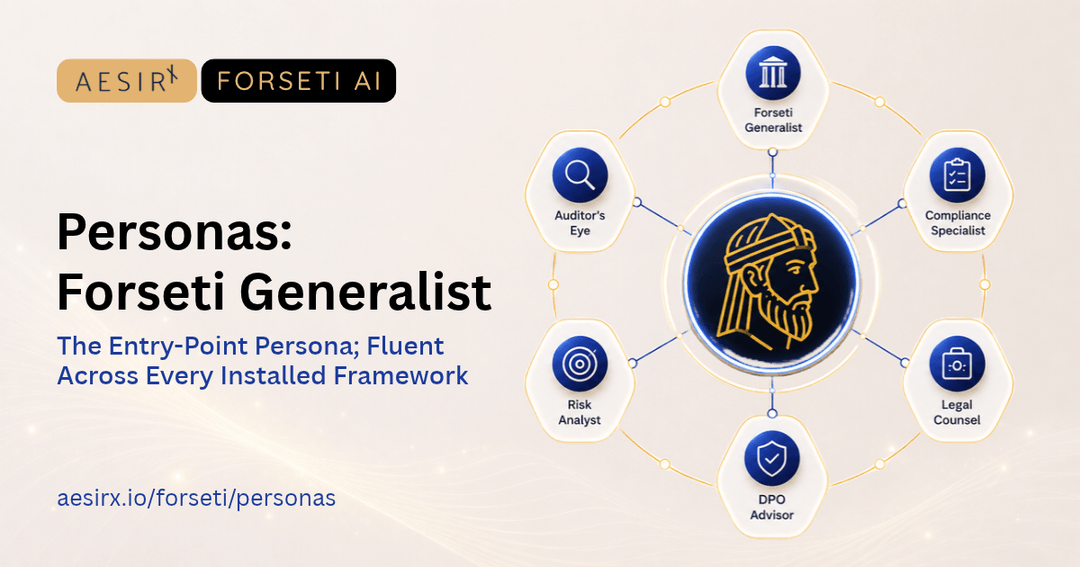
A data protection officer spends a disproportionate share of their week on six recurring tasks. Three are drafting DPIAs for new processing activities, keeping RoPA entries current as processing changes, and assessing cross-border transfer impact. The other three are drafting breach notification timelines under multi-jurisdictional clocks, responding to rights requests on multi-department workflows, and assembling authority-request responses. Each task has its own framework anchor (PDPL Article 21 for DPIAs and Article 31 for the protection measures on biometric and location data, GDPR Article 30 for RoPA, GDPR Article 28 for sub-processors, the breach notification windows under PDPL, GDPR, ePrivacy, and the Cybersecurity Law).
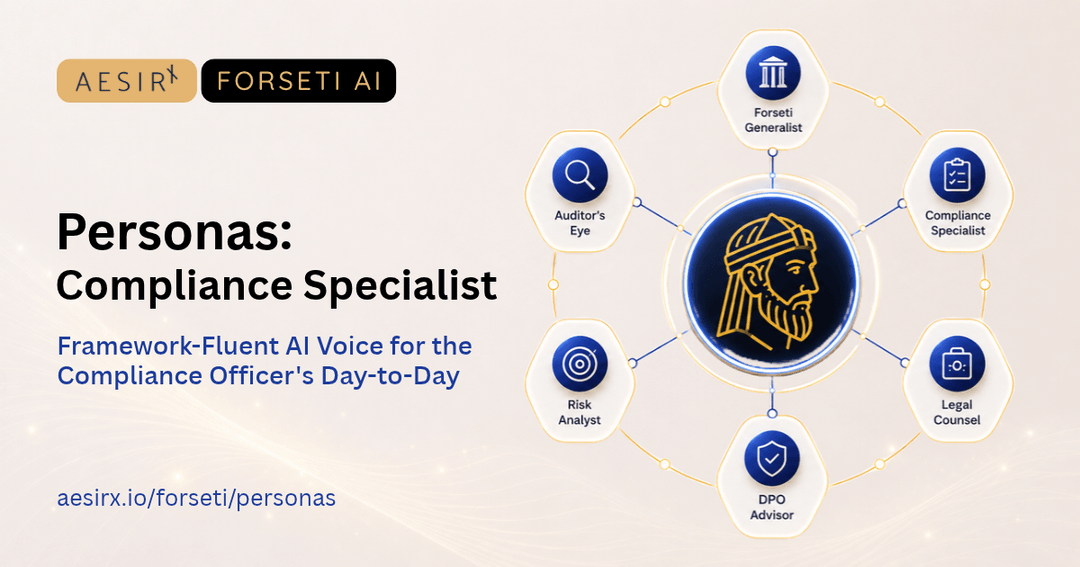
The DPO Advisor persona is tuned for the privacy motion. Its instructions centre on the Vietnamese PDPL and GDPR, but no framework text is loaded into it in advance: each conversation is grounded in the frameworks your organisation has installed, and it reads DPIAs, rights requests, processing activities and other privacy records through its search tools, within the permissions of the person asking. Its tool affinity is biased toward the privacy workflow pack (DPIA auto-completion, RoPA hygiene auto-fix, TIA auto-draft, breach timeline, authority response, dossier filing pre-flight, DSR batch processing).
Every privacy answer ships with an inline citation naming the framework and the specific requirement. The DPO accepts or rejects every draft. Nothing files autonomously; even the dossier-filing pre-flight surfaces what is ready and waits for the DPO to click file.
Each conversation tells the DPO Advisor which frameworks your organisation has installed, and it may cite a framework only when its regulatory search returned that text in the same turn. Where your organisation has installed the PDPL and GDPR, cross-framework privacy reasoning (for example, PDPL × GDPR breach notification windows) stays in one conversation; a framework you have not installed is not cited.
The persona reaches for the privacy workflow pack first — DPIA auto-completion, RoPA hygiene auto-fix, cross-border TIA auto-draft, consent gap analysis, breach notification timeline, authority-request response, dossier-filing pre-flight, DSR batch processing, privacy-scanner anomaly explanation, cookie/ePrivacy AI insight.
The DPIA auto-completion workflow extends the framework-aware DPIA registry. It pre-fills risk identification, mitigations, and necessity / proportionality reasoning with citations to PDPL and GDPR. The DPO accepts or rejects per field; the draft persists until accepted or rejected.
The RoPA hygiene auto-fix workflow checks Records of Processing entries against the PDPL, GDPR, Decree 165, and ISO 27701 completeness rules. Per-gap suggested fixes are surfaced with citations and deep-link Fix buttons into the activity editor.
The cross-border TIA auto-draft workflow is pre-loaded with an adequacy posture table covering the sixteen regions under an adequacy decision plus the full thirty-territory EEA set. The drafted assessment includes risks, safeguards, and citations to the source articles.
The breach notification timeline workflow reads the personal-data breach and security-incident notification duties your organisation's installed frameworks declare — to a supervisory authority, to affected data subjects, or to a CSIRT — and drafts one row per duty. There is no fixed rule list inside the platform: a framework you install brings its duties, and a framework you have not installed adds none. Each row counts from the event its own record names — discovery, awareness or containment — so where GDPR and NIS2 are installed, GDPR's Art. 33 notification and NIS2's early warning and incident notification count from awareness. A duty whose record states no period is shown undated rather than given an invented one. The output is a structured timeline draft with the citation for each duty.
A question about contract redline or vendor risk acceptance triggers a redirect to the Legal Counsel or Risk Analyst persona. A question outside the privacy scope entirely triggers the standard off-topic refusal block.


 DPIA drafts are reconstructed manually with each new processing activity.
 The persona works over the frameworks your organisation has installed and reads privacy records on demand.RoPA entries drift from current processing because the hygiene check is manual.The privacy workflow pack is one click away from any privacy record.Cross-border transfer assessments are inconsistent across destinations.Every draft ships with citation per field; the DPO accepts or rejects.Breach notification windows are looked up by hand each time, with risk of jurisdiction-clock errors.Breach notification timelines are built from the duties your installed frameworks declare, each counted from the event its own record names.

Every privacy answer ships with an inline citation naming the framework and the specific requirement. Every workflow draft is reviewed and accepted per field by the DPO.

The dossier-filing pre-flight surfaces what is ready; the operator clicks file. Forseti does not file autonomously with a regulator under any code path.

AI-generated evidence — draft regulator letters, draft DPIA narratives, draft remediation plans — enters with a draft-only status. The transition to approved is enforced as a human action under every code path.

Use the English or Vietnamese privacy playbooks for assessment screening, RoPA sufficiency, notices, rights and transfers. On Standard and Enterprise, move into Privacy Workflows on the relevant record and inspect the sources and decisions still outstanding.
Ready to see a DPIA drafted from a processing activity in two minutes with citation per field? Request a personalised demo.


Ronni K. Gothard Christiansen - Technical Privacy Engineer & CEO
Technical Compliance Expert, 32+ Years Open Source Advocate, X-BoD Open Source Matters Inc.

Run the DPIA auto-completion, RoPA hygiene, and breach notification timeline workflows through the DPO Advisor persona for 30 days against your privacy records.

Talk to our team about how the DPO Advisor fits into your existing DPO workflow and rights-request operational cadence.
DPIA drafting, RoPA hygiene against the 4-framework completeness registry, cross-border transfer impact assessment, breach notification timeline drafting under multi-jurisdictional clocks, authority-request response drafting, dossier-filing pre-flight, and DSR batch processing.
It sees the ones your organisation has installed. No pack is loaded into the persona in advance: each conversation tells it which frameworks are installed — PDPL, GDPR, the Cybersecurity Law, ePrivacy, ISO 27001 or SOC 2, where you have installed them — and it cites a framework only when its regulatory search returned that text in the same turn.
No. The dossier-filing pre-flight surfaces what is ready; the operator clicks file. Forseti does not file autonomously with a regulator under any code path, including the DPO Advisor persona.
It reads every personal-data breach and security-incident notification duty your installed frameworks declare and drafts one row per duty, each counted from the event its own record names. Duties in the jurisdictions the incident records are listed first and raise follow-up tasks; the others stay visible, because hiding a duty is worse than showing one that may not bind. A duty whose record states no period is shown undated, never given a default. The output is a structured timeline draft with the citation for each duty.
No. The DPO Advisor's prompt ships in its runtime persona pack and is identical on Light, Standard, and Enterprise — no tier offers a tenant-level override. The prompt is reviewable on request, and what it picks up per conversation is your own context: the user's locale and role, the organisation's tier, and the regulatory packs your organisation has installed.


The evolution of Aesir is Aesir +  (the Norse symbol for Necessity)"Needed in order to achieve a particular result"
♥Join the AesirX Privacy Newsletter. Stay Informed. Stay Compliant.