
DPO Radio
Active
 MANUFACTURING PRODUCT QUALITY OVERLAY
Prepare authority-ready manufacturing records without separating products, batches, technical rules, and corrective actions.

Vietnam’s active product-quality stack combines the Law on Product and Goods Quality, Decree 37/2026/NĐ-CP, and Ministry of Industry and Trade Circulars 31, 33, and 34/2026/TT-BCT. Together they create operational work around product identification, risk classification, traceability, quality management, and conformity evidence.
The overlay is optional and manufacturing-scoped. Organizations that manufacture, import, trade, or manage affected products can install it directly after confirming scope. Other organizations can install it reference-only without activating its deadlines or score contribution.
ComplianceOne helps teams prepare, manage, and review the supporting records. It does not determine legal applicability or replace professional advice.
In-scope manufacturers, importers, product traders, supply-chain operators, and conformity or traceability owners.
Product and Goods Quality Law; Decree 37; Circulars 31, 33, and 34.
Product identity, category, HS code where relevant, batch/lot/serial, supplier, and responsible owner.
Product-risk screening, QCVN mapping, testing, declarations, certificates, monitoring, and corrective action.
Traceability codes, events, counterparties, locations, and supporting evidence.
Circular 33’s medium- and high-risk product list is treated as a reference list, not a fillable form.
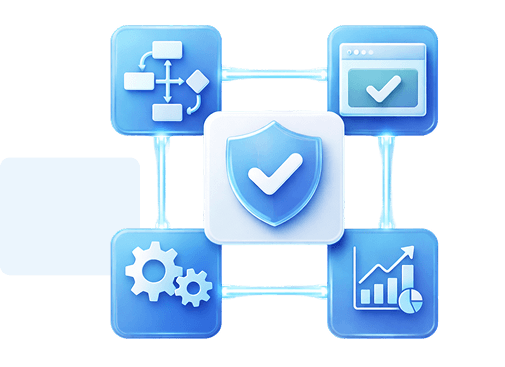
Teams can maintain a structured product inventory, connect products and batches to the applicable technical rules, and retain the reasoning used for risk classification. Traceability records connect identifiers, events, parties, and evidence instead of leaving the chain across separate files.
Conformity records help track tests, declarations, certificates, coverage, validity, and renewal. When evidence fails or expires, corrective-action and recall records preserve the affected products, decisions, owners, and closure evidence.
 Compliance Forms
Structures organization-prepared product, quality, traceability, and authority-response records.
Explore Compliance Forms

 Product, batch, supplier, and QCVN records sit in separate files.
 Connect product identity, risk classification, QCVN, and conformity evidence.Risk-list screening is difficult to reproduce during review.Track traceability events against batches, parties, and supporting records.Traceability events cannot be followed as a connected chain.Route quality gaps into accountable corrective action.Expired conformity evidence is easy to miss.Reuse evidence across related manufacturing overlays without duplicating it.
A product's risk classification keeps the QCVN mapping and reasoning that produced it, so a reviewer questioning why a product was screened as medium risk can see the basis rather than take the classification on faith.

Traceability events, counterparties, and locations connect to the same batch record a conformity certificate covers, so a recall investigation can follow one product's path through the supply chain instead of piecing it together from separate logs.

Expired or failed conformity evidence connects directly into corrective-action records, keeping the affected product, decision, and closure evidence together instead of losing track of what triggered the review.
See how ComplianceOne connects product, traceability, conformity, and corrective-action evidence.

Ronni K. Gothard Christiansen - Technical Privacy Engineer & CEO
Technical Compliance Expert, 32+ Years Open Source Advocate, X-BoD Open Source Matters Inc.
No. It is optional and intended for organizations with relevant manufacturing, importing, product-trading, quality, conformity, or traceability activities. Others can use reference-only mode.
The operating stack includes the Product and Goods Quality Law, Decree 37/2026/NĐ-CP, and Circulars 31, 33, and 34/2026/TT-BCT.
No. ComplianceOne presents it as a regulator-issued reference list used during product screening, not as a fillable submission form.
Yes. Teams can prepare working records linking products, batches, lots or serials, traceability identifiers, events, counterparties, and evidence.
No. ComplianceOne helps structure evidence, ownership, review, and follow-up. Legal and technical conformity decisions remain with the organization and its advisers.

Test product, traceability, and conformity workflows with a scoped manufacturing portfolio.

Review product scope, evidence sources, ownership, and related technical regulations.


The evolution of Aesir is Aesir +  (the Norse symbol for Necessity)"Needed in order to achieve a particular result"
♥Join the AesirX Privacy Newsletter. Stay Informed. Stay Compliant.
 Data Mapping
 Monitoring Programs
 Incident Response
 Audit Trail