
DPO Radio
 MANUFACTURING TECHNICAL REGULATIONS OVERLAY [ACTIVE]
Begin with Circular 37 requirements for textiles, fluorescent lamps, and paint while keeping the overlay optional and product-scoped.

Circular 37/2026/TT-BCT is active from 1 July 2026 and issues three amendments to national technical regulations. They address formaldehyde and azo dye-derived aromatic amines in textile products, mercury in fluorescent lamps, and lead in paint.
This optional manufacturing overlay is not universal. Direct installation is intended for organizations manufacturing, importing, supplying, or managing conformity for affected products. Other organizations can install it reference-only.
ComplianceOne helps teams prepare product-to-QCVN mappings, testing records, supplier declarations, conformity evidence, and corrective actions. Technical and legal conclusions remain with qualified reviewers.
In-scope textile products, fluorescent lamps, and paint.
Textile product manufacturers and importers, fluorescent lamp manufacturers and importers, paint manufacturers and importers, and organizations that own product conformity.
Circular 37 and its three active QCVN amendments.
Category, HS code where relevant, QCVN version, batch/lot/serial, supplier, and market-placement evidence.
Substance, method, laboratory, sample scope, result, product coverage, and validity.
Supplier declarations, tests, declarations or certificates, renewal, and corrective action.
The three QCVN amendments are technical-regulation references, not fillable forms.
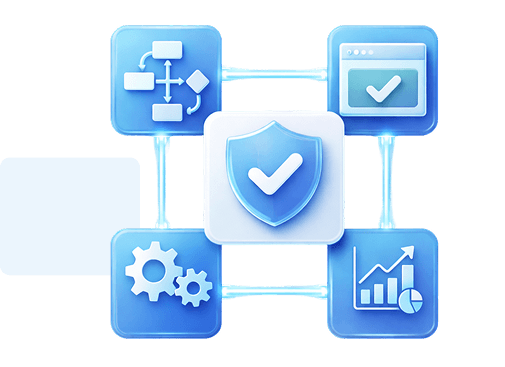
Teams can screen product scope and maintain a versioned product-to-QCVN record. Supplier declarations and laboratory evidence remain connected to the products and batches they support.
Conformity records track coverage, status, validity, and renewal. Failed or expired evidence can trigger corrective-action records linked to affected products, suppliers, retesting, containment, or recall.
 Compliance Forms
Structures organization-prepared screening, testing, conformity, and corrective-action records.
Explore Compliance Forms

 Product scope and QCVN versions are difficult to reproduce.
 Link products and batches to the applicable QCVN amendment.Supplier declarations are disconnected from laboratory evidence.Connect supplier, testing, and conformity evidence.Test coverage and certificate validity are hard to monitor.Track validity, review, renewal, and evidence gaps.Failed evidence does not consistently reach corrective action.Route nonconformity into accountable corrective action and recall links.
A textile, lamp, or paint product's QCVN mapping stays versioned against the specific 2026 amendment it must meet, so a supplier or auditor asking which regulation applies gets a traceable answer, not a static spreadsheet.

Laboratory test results for formaldehyde, azo dyes, mercury, or lead stay connected to the supplier declaration and product batch they support, so conformity evidence and its source never separate.

A failed or expired test result routes into corrective action tied to the affected product, batch, and supplier, connecting containment and retesting to the evidence that triggered it.
See how ComplianceOne connects product scope, QCVN, suppliers, tests, conformity, and corrective action.

Ronni K. Gothard Christiansen - Technical Privacy Engineer & CEO
Technical Compliance Expert, 32+ Years Open Source Advocate, X-BoD Open Source Matters Inc.
No. The implemented overlay begins with affected textile products, fluorescent lamps, and paint. Direct scope requires product-level assessment.
The overlay covers the 2026 amendments to QCVN 01:2017/BCT, QCVN 02A:2020/BCT, and QCVN 08:2020/BCT.
No. They are regulator-issued technical-regulation instruments and are presented as non-form references.
Yes. Working records can connect test scope, laboratory, method, result, validity, products, batches, suppliers, and conformity evidence.
No. It helps teams manage evidence, ownership, review, and corrective action. Certification and legal conformity decisions remain with authorized parties.

Test product-to-QCVN, supplier, laboratory, conformity, and corrective-action records.

Review affected products, evidence sources, QCVN versions, and operating ownership.


The evolution of Aesir is Aesir +  (the Norse symbol for Necessity)"Needed in order to achieve a particular result"
♥Join the AesirX Privacy Newsletter. Stay Informed. Stay Compliant.
 Data Mapping
 Vendor Governance
 Monitoring Programs
 Incident Response