

DPO Radio
 VIETNAM TELECOM LAW
Manage authority request response, disclosure controls, and confidentiality compliance under the Telecommunications Law 2023.


The Vietnam Telecommunications Law 2023 (Law 24/2023/QH15) establishes a sector-specific compliance overlay for telecommunications operators, internet service providers, and platform companies operating in Vietnam. Administered by the Ministry of Information and Communications (MIC), it imposes obligations around user information confidentiality, disclosure controls, authority request handling, and operational security measures. The law took effect on 1 July 2024 and was later further detailed by Decree 163/2024/ND-CP (effective 24 December 2024), which prescribes 7 official Mau so form templates.
For telecom operators and ISPs, the law creates obligations that go beyond general data protection. User information must be treated as confidential by default, with organizational and technical protection controls in place. Any disclosure of user information requires explicit legal basis – whether user consent, court order, authority request, or statutory obligation – and every disclosure event must be logged with the recipient, scope, legal basis, and internal approval chain. This mandatory disclosure logging is a distinctive feature of the telecom regulatory regime.
The authority request handling obligation is particularly operationally demanding. When authorities submit requests for user information or telecommunications data, operators must follow a defined workflow: receive the request, verify its legitimacy, conduct legal review, obtain management sign-off, execute the response, and log the entire interaction. Each step must be evidenced, and the response must be timely per the operator's configured SLA. Organizations that handle authority requests informally – without structured workflows, verification gates, or audit trails – risk both regulatory penalties and inadvertent unauthorized disclosure.
The telecom law's obligations overlap with other Vietnam frameworks. A telecom operator processing personal data is simultaneously subject to the PDPL and potentially the Cybersecurity Law. Managing these overlapping obligations requires a platform that supports sector-specific workflows while maintaining consistent evidence production across all applicable frameworks.
Telecommunications operators, internet service providers, platform companies providing telecom-adjacent services in Vietnam
Licensed telecom operators, ISPs, mobile virtual network operators, platform companies classified under telecom regulations
User information confidentiality by default, minimum protection controls (access controls, encryption, monitoring, training), disclosure only with proper legal basis, mandatory disclosure logging, internal approval workflow for disclosures, authority request handling per defined workflow
Confidentiality protection records, access control and encryption documentation, disclosure logs with legal basis and approval chain, authority request handling records with verification and response evidence, staff training records
Responses to authority requests through defined channels, using Decree 163 Mau so form templates (7 forms from subset of 01-45)
Policy-defined authority request response timelines (configurable per organization), ongoing compliance with confidentiality and disclosure obligations
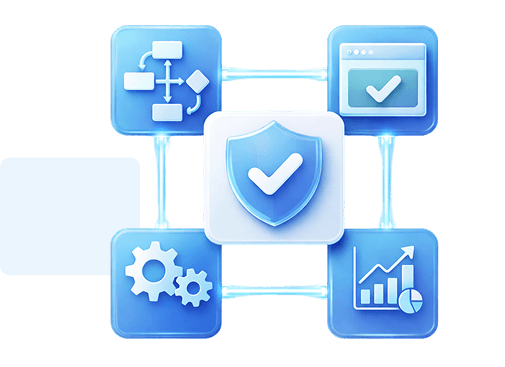
ComplianceOne provides structured workflows for the telecom law's core obligations, starting with authority request handling. The Monitoring Programs module supports the full authority request lifecycle: request receipt, legitimacy verification (verification gate), legal review, management approval, response execution, and case closure with evidence preservation. Each step generates an audit event, creating a complete record of how the request was verified, reviewed, approved, and fulfilled. The disclosure log captures every disclosure event with the recipient, scope, legal basis, and internal approval chain – satisfying the mandatory disclosure logging requirement.
The Compliance Forms module includes Decree 163 Mau so form templates for telecom-specific filings and responses. These templates are structured to match the prescribed data fields and are available in both Vietnamese and English. The filing workflow ensures responses are prepared using the correct form type and submitted through the appropriate channels.
For confidentiality and protection control obligations, the Program Governance module helps telecom operators establish and maintain their protection framework – defining access control policies, encryption standards, monitoring procedures, and staff training requirements. These governance artifacts are managed with version control and approval workflows, providing evidence that the required minimum protection controls are in place and actively maintained.
Organizations subject to both the Telecom Law and other Vietnam frameworks manage all obligations from ComplianceOne's shared workflow engine. A telecom operator that also processes personal data under the PDPL and is subject to the Cybersecurity Law manages all three sets of obligations with consistent audit trail coverage and evidence production. Cross-framework inspection readiness ensures that when MIC or other authorities request documentation, the organization can produce evidence packs covering all applicable frameworks.
 Monitoring Programs
Manages authority request lifecycle with verification gates, approval workflows, and disclosure logging.
Explore Monitoring Programs Audit Trail
Captures tamper-evident records of disclosure events, authority request handling, and confidentiality compliance actions.
Explore Audit Trail Compliance Forms
Provides Decree 163 Mau so form templates for telecom-specific filings and authority responses.
Explore Compliance Forms Program Governance
Manages confidentiality policies, protection controls, training requirements, and governance review schedules.
Explore Program Governance

 Authority requests are handled informally without verification gates, leaving operators vulnerable to unauthorized disclosure.
 Authority requests follow a structured workflow with verification, legal review, management approval, and audited response execution.Disclosure events are logged inconsistently across departments, with no centralized register of legal basis and approval chain.Every disclosure event is logged with recipient, scope, legal basis, and approval chain in a centralized, tamper-evident register.Confidentiality protection controls are documented in static policy documents without evidence of active implementation.Protection controls are managed as governance artifacts with version control, review schedules, and active compliance evidence.Multi-framework obligations (telecom + PDPL + cybersecurity) are managed in separate systems, creating documentation gaps.Cross-framework compliance is managed from a single platform with consistent audit trail and evidence production.Organizations cannot produce a complete authority request history when MIC or other authorities request one.Complete authority request and disclosure histories are available on demand as evidence packs.
ComplianceOne supports the Vietnam Telecom Law alongside 6 other Vietnam regulatory frameworks within a shared workflow engine, enabling telecom operators to manage overlapping obligations from a single platform with consistent evidence production.

The authority request handling workflow enforces a structured process – verification gate, legal review, management sign-off, response execution, and closure – with audit events at every step. This addresses the telecom law's requirement for documented, accountable authority interactions.

12 internal operational templates and 7 Decree 163 Mau so form templates support telecom-specific compliance documentation, with audit trail coverage ensuring every action produces evidence of operational compliance.
Ready to see how ComplianceOne manages telecom regulatory obligations operationally? Request a demo tailored to your organization's needs.

Ronni K. Gothard Christiansen - Technical Privacy Engineer & CEO
Technical Compliance Expert, 32+ Years Open Source Advocate, X-BoD Open Source Matters Inc.
The platform manages the full authority request lifecycle through the Monitoring Programs module: request receipt, legitimacy verification (verification gate), legal review, management approval, response execution, and case closure. Each step generates an audit event, and the disclosure is logged with recipient, scope, legal basis, and internal approval chain.
Yes. Every disclosure event – whether responding to an authority request, fulfilling a court order, or handling a consent-based disclosure – is logged in a centralized, tamper-evident register with the recipient, scope, legal basis, approving authority, and timestamp. This satisfies the telecom law's mandatory disclosure logging requirement.
Yes. ComplianceOne supports 7 Vietnam regulatory frameworks within a shared workflow engine. Telecom operators subject to the Telecom Law, the PDPL, and the Cybersecurity Law manage all obligations from a single platform with consistent audit trail coverage and evidence production across frameworks.
ComplianceOne includes 7 Mau so form templates from Decree 163/2024/ND-CP, covering telecom-specific filings and authority responses. These templates are structured to match prescribed data fields and are available in both Vietnamese and English.
Yes. The Program Governance module supports training and awareness delivery (UC-VN-18), including audience/role assignment, completion tracking, knowledge assessment, acknowledgment collection, and refresher scheduling. Training compliance evidence is captured in the audit trail for inspection readiness.

Test telecom compliance workflows with your team – authority request handling, disclosure logging, and governance documentation.

Talk to our team about telecom compliance operations, multi-framework coverage, and deployment options for your organization.


The evolution of Aesir is Aesir +  (the Norse symbol for Necessity)"Needed in order to achieve a particular result"
♥Join the AesirX Privacy Newsletter. Stay Informed. Stay Compliant.