DPO Radio
AESIRX COMPLIANCEONE
Open the next current record with its responsibility and date in view
Prioritize permitted Matters, personal planning assignments and records currently available for review.
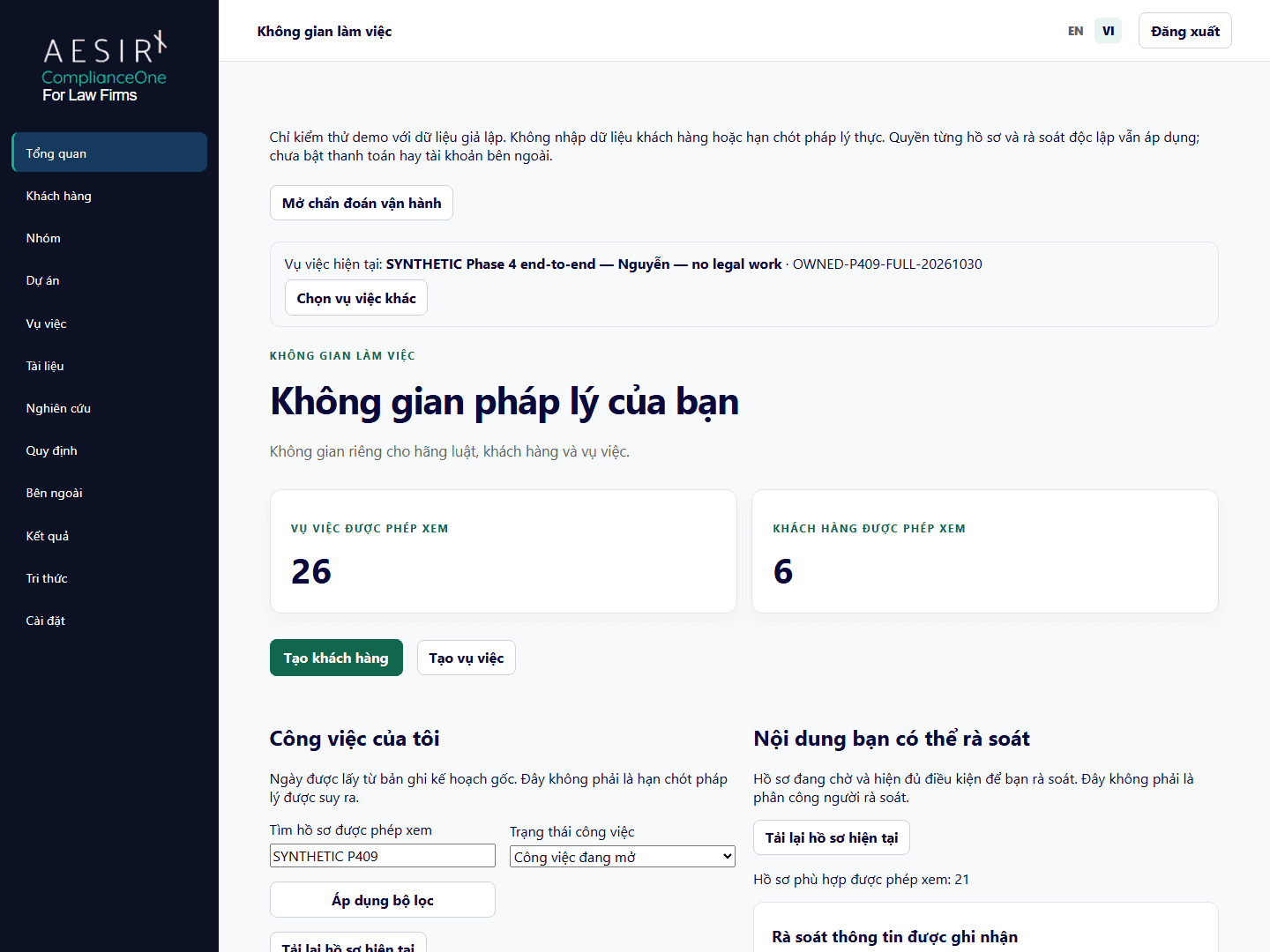
A list of Matter names does not explain what a lawyer should work on next. Responsibility, status and the next recorded action can be buried inside each issue.
Lawyers and supervising staff also need to distinguish their access role from recorded responsibility and review eligibility. A person may be able to review a record without having been appointed its reviewer.
Daily work brings authorized caseload filters together with personal native assignments and review links. It helps staff open the current record while retaining missing data and the meaning of its dates.

Filter accessible Matters by status, client, recorded responsible lawyer and confidentiality. Use the available activity, reference or next-date sort to inspect the intended slice of work.
Compact Matter results separate the viewer’s access role from explicitly recorded responsibility. Missing assignments and unavailable planning context remain visible instead of being filled by inference.
My work derives current personal assignments from native planning. Named links open the relevant task or action, with all-day dates and timed instants retaining their displayed timezone meaning.
Available review links identify facts, assessments or drafts the user can currently review. Open the exact record and inspect current source and eligibility before taking a review action.


 The next task is hidden inside each engagement.
 Filter and sort the current permitted caseload.Owners and access roles are conflated.Read recorded responsibility separately from access.Missing dates look like completed planning.See native personal tasks and their schedule.Review eligibility is mistaken for assignment.Open an exact currently reviewable record.An old task link is assumed to remain authorized.Recheck current authority at the linked destination.

A lawyer can move from My work to the named native task.

Caseload cards preserve missing responsibility and date information.

Pending review links reflect current eligibility rather than invented reviewer appointments.
Review the workflow with representative synthetic records and the roles your firm intends to use.

Ronni K. Gothard Christiansen - Technical Privacy Engineer & CEO
Technical Compliance Expert, 32+ Years Open Source Advocate, X-BoD Open Source Matters Inc.
My work derives accessible current personal assignments from native planning records. It is not a separate copied task system, and the destination retains its own current access checks.
Access role and recorded responsibility are distinct. The responsible-person field requires an explicit eligible selection and does not verify qualification, grant access or infer reviewer appointment.
Check whether the record uses an all-day local date or a timed instant in the displayed timezone. Planning dates do not by themselves establish statutory legal deadlines.
The list shows records currently available for that user to review. Eligibility is not reviewer assignment; staff should open the exact record and follow the firm’s review process.
Daily views are bounded by current firm, record and planning authority. The application checks access for the returned records and destinations rather than exposing another firm’s private work as a navigation shortcut.

Discuss the deployment, audience and source-rights requirements for an agreed evaluation.

See how your firm could organise daily caseloads, personal tasks and review priorities.


The evolution of Aesir is Aesir +  (the Norse symbol for Necessity)"Needed in order to achieve a particular result"
♥Join the AesirX Privacy Newsletter. Stay Informed. Stay Compliant.