DPO Radio
AESIRX COMPLIANCEONE
Give each legal issue its own context and evidence boundary
Keep named members, structured facts and recorded responsibility together around one legal issue.
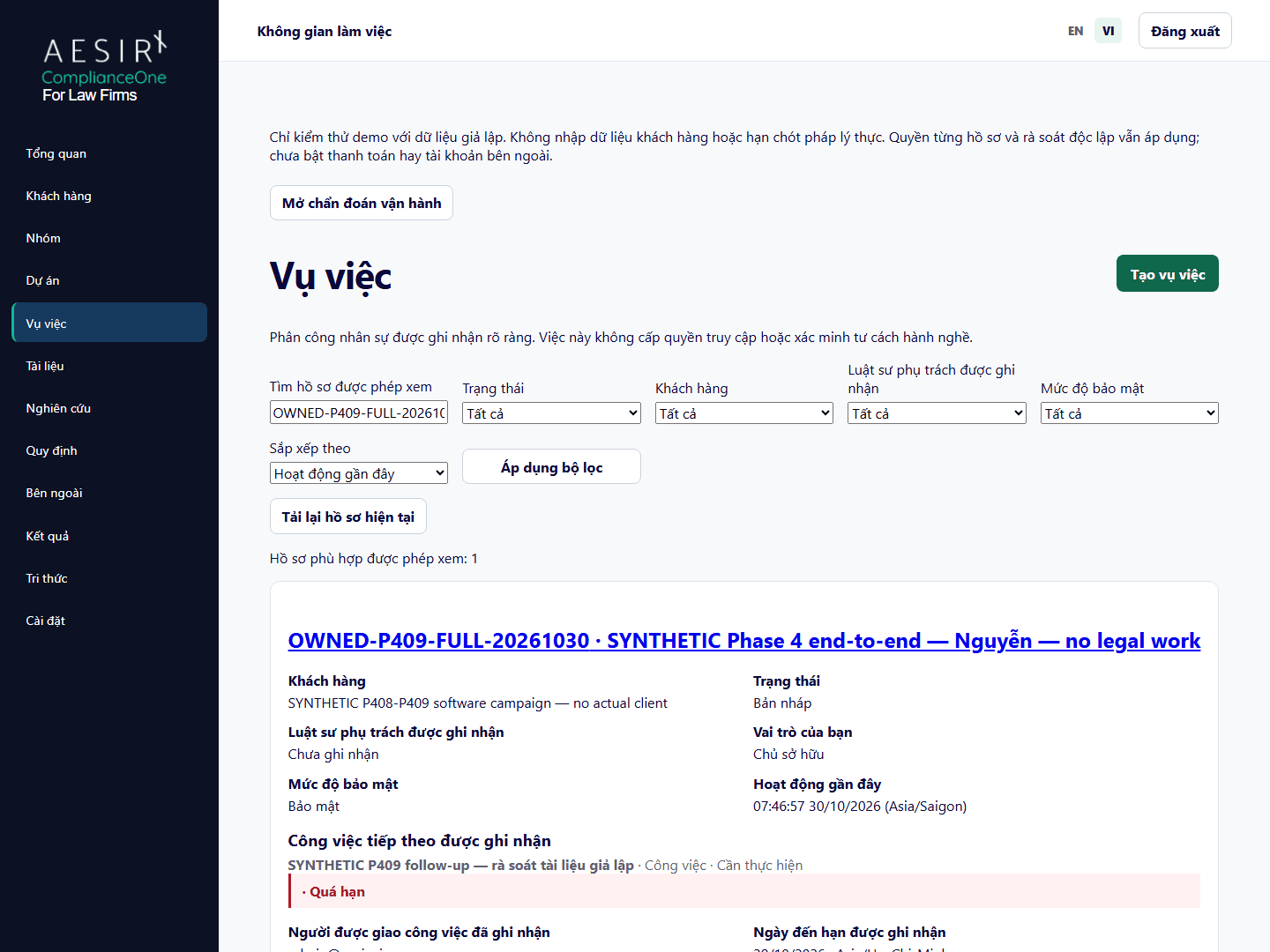
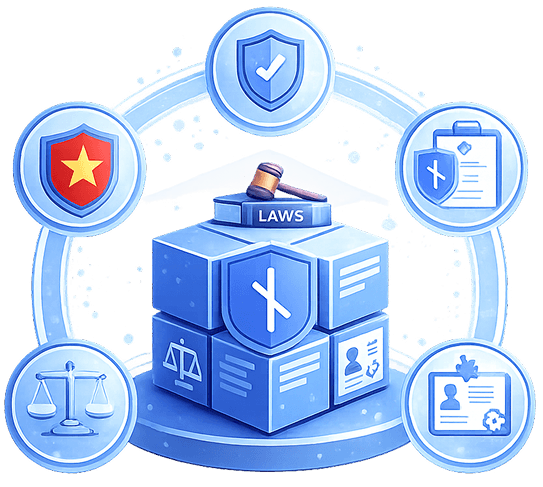
Different issues for the same client can involve different lawyers, evidence and confidentiality needs. A general project folder cannot explain which people currently have access to each issue.
Lawyers also need to distinguish an entered fact from a confirmed proposition and a selected jurisdiction from a conclusion about applicable law. These distinctions become harder to reconstruct when notes are scattered.
A Matter holds the legal context and its explicit membership. Staff can maintain structured proposals and recorded responsibility while checking the source and review state before relying on an assertion.

Record a name, reference, description and supported jurisdictions. The intake flow explains confidentiality choices and previews the proposed access before creation.
Use the authorized membership and ownership controls for the specific Matter. Project or team participation alone is not a substitute for a reviewed Matter access decision.
Enter an explanatory statement, compatible typed value and supporting source where available. Preserve date precision and unknowns; an eligible reviewer must explicitly confirm a proposal.
An authorized editor can select an eligible current Matter member as the recorded responsible person. That field is distinct from the viewer’s access role and does not verify professional qualification.


 Issue context is scattered across messages.
 Keep a named legal issue and description.Membership is inferred from a shared folder.Review explicit current Matter membership.Typed values lack an explanatory proposition.Link structured proposals to supporting sources.Unknown dates are filled with assumptions.Retain known date precision and unknowns.Access roles are mistaken for responsibility.Record responsibility without inferring it from access.

A fact proposal retains its statement, value and review state.

Jurisdiction and confidentiality choices can be inspected before the Matter is created.

The person viewing a Matter can distinguish their role from recorded responsibility.
Review the workflow with representative synthetic records and the roles your firm intends to use.

Ronni K. Gothard Christiansen - Technical Privacy Engineer & CEO
Technical Compliance Expert, 32+ Years Open Source Advocate, X-BoD Open Source Matters Inc.
A Matter is the private legal issue and evidence boundary. An engagement Project coordinates planning and assignments and can relate to several named Matters without replacing their separate access rules.
A jurisdiction selection records context for the legal issue. It does not establish that every installed instrument applies or replace a lawyer’s assessment against the client’s facts.
Structured facts support declared date precision. Staff should preserve whether a year, month or exact day is known rather than inventing a day or treating a planning date as a statutory deadline.
A currently eligible reviewer must explicitly confirm it under the Matter’s current rules. The proposal, its source and any invalid legacy values need inspection before new reliance.
Recorded responsibility is an explicit staff selection. It does not grant membership, verify a professional qualification, infer ownership or appoint a person to review every pending record.

Discuss the deployment, audience and source-rights requirements for an agreed evaluation.

Book a demo to see how private legal Matters keep evidence, access and responsibility clear.


The evolution of Aesir is Aesir +  (the Norse symbol for Necessity)"Needed in order to achieve a particular result"
♥Join the AesirX Privacy Newsletter. Stay Informed. Stay Compliant.