DPO Radio
Redline Document Review
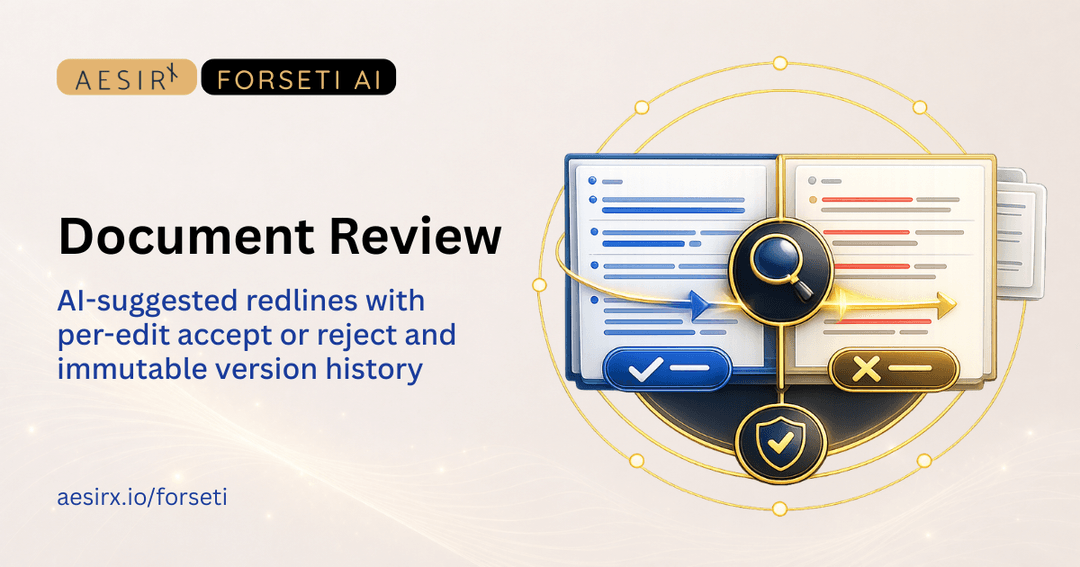
Upload a draft contract, DPA, or policy memo. Forseti proposes redlines per clause with citation to the relevant framework requirement. The reviewer walks the redlines, accepts what is right, rejects what is not.


Contract review at scale is a structured workflow: walk the clauses, compare against the clause library, suggest redlines, route the suggestions, record the rejections. A general-purpose AI tool that suggests redlines without grounding loses the citation chain; a manual review process loses the rejection record. The audit story for an unaccepted suggestion is "it was rejected", but without the record, the reasoning is lost.
The redline document review surface keeps both intact. Suggestions ship with citations to the clause library and the framework requirement. Versions are immutable. Rejections persist with operator and time. The auditor walks the version history and sees both accepted edits and rejected suggestions.
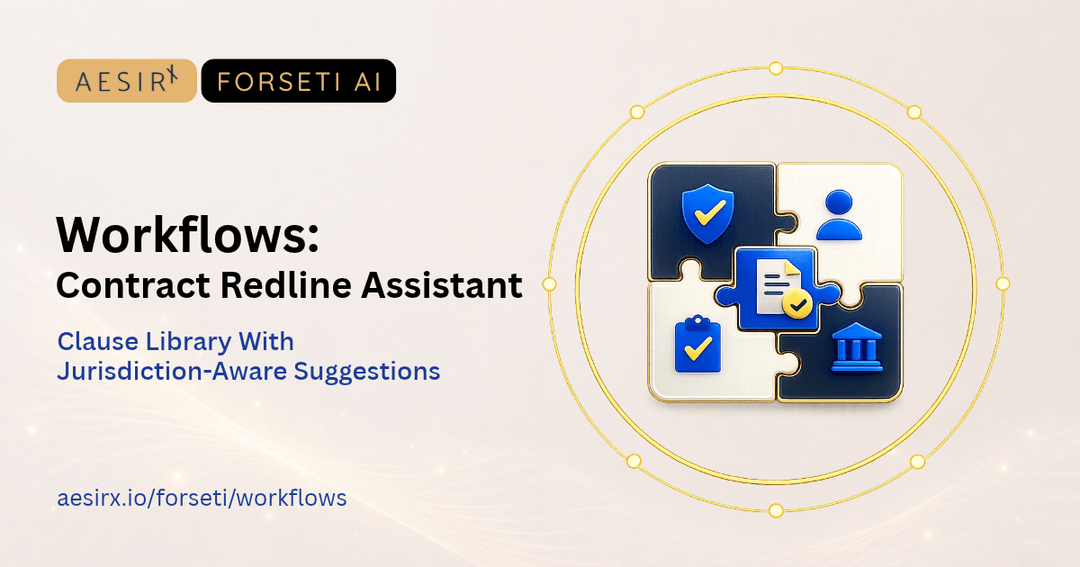
The legal counsel uploads a draft document — contract, DPA, vendor agreement, governance document, policy memo. The clause library and the regulatory packs applicable to the document type drive the redline suggestions.
Forseti proposes redlines per clause. Each suggestion ships with citation to the clause library entry and to the framework requirement the clause supports.
The contract's governing law clause anchors the jurisdiction. Suggested risk language adapts to Vietnamese, English, or EU contract-law conventions.
The reviewer walks the suggestion list and accepts or rejects per redline. The version history records both decisions with operator and time.
Versions are immutable. Each accepted set of edits creates a new version layered on the prior. Rejected suggestions persist in the version history alongside accepted edits.
The reviewer can attach a rejection reason. The reason is recorded in the version history with operator and time so future reviewers (or auditors) can see the reasoning.


 Contract reviews lose citations during the redline copy-paste motion.
 Per-clause citation to clause library and framework requirement.Rejection records live in email side channels.Per-edit accept or reject with operator and time recorded.Versioning is bespoke per document with no immutable provenance.Immutable version history with rejection reasons preserved.

Each redline suggestion cites the clause library and the framework requirement. Suggestions without grounding ship with the "no grounding" marker.

Rejections persist in the version history. When an auditor asks why a suggestion was not accepted, the rejection reason is in the history.

The version history is immutable. Rollback works by rolling forward to a new version that reverts the change; the prior accepted edit remains in the history.
| Framework | How Redline Document Review Supports It |
|---|---|
| EU GDPR | Suggests redlines aligned with GDPR Article 28 controller-processor and other relevant requirements. |
| Vietnam PDPL | Suggests redlines aligned with PDPL processor and cross-border requirements. |

A reviewer can apply accepted and source-supported contract-playbook findings to a new DOCX version as tracked changes. Use the version preview and search to confirm the document and passage behind the edit.
Ready to see a vendor DPA reviewed against GDPR Article 28 with per-clause citation and immutable version history? Request a personalised demo.

Ronni K. Gothard Christiansen - Technical Privacy Engineer & CEO
Technical Compliance Expert, 32+ Years Open Source Advocate, X-BoD Open Source Matters Inc.

Run redline document review against your active contract pipeline for one quarter.

Talk to our team about which document types to prioritise first.
No. The reviewer accepts or rejects per redline. The version history records both decisions.
The contract's governing law clause anchors the jurisdiction. Suggested risk language adapts to Vietnamese, English, or EU contract-law conventions.
Yes. The rejection reason is recorded in the version history with operator and time.
Yes. The reviewer rolls forward to a new version that reverts the change. The prior accepted edit remains in the version history.
Standard and Enterprise tiers have document redline review. The Light tier focuses on the chat and basic workflow surface.


The evolution of Aesir is Aesir +  (the Norse symbol for Necessity)"Needed in order to achieve a particular result"
♥Join the AesirX Privacy Newsletter. Stay Informed. Stay Compliant.