
DPO Radio

 MONITORING
Framework-linked monitoring programs, auto-cycle scheduling, regulator inquiry workflows, and readiness scoring in one module.

Compliance is not a one-time achievement – it requires ongoing monitoring to ensure that controls remain effective and that regulatory changes are reflected in organizational practice. Under the Vietnam PDPL, Cybersecurity Law, and Data Law, organizations must demonstrate that their compliance posture is continuously maintained, not just assessed at onboarding.
Enterprise DPOs (P-VN-01) and Cybersecurity and Legal Operations Leads (P-VN-06) manage monitoring programs that span multiple frameworks. Each framework has its own review cadence, control requirements, and authority inquiry expectations. When monitoring programs are managed through calendars and task lists disconnected from the regulatory context, review cycles slip, task completion is inconsistent, and there is no reliable way to measure whether the organization is improving or degrading over time.
The operational consequences are serious: a regulator requests evidence of ongoing compliance and the team scrambles to assemble it; a semiannual review is missed because the calendar reminder was dismissed; a change in regulation goes undetected because no one is tracking updates systematically.
Monitoring Programs addresses this by linking programs directly to regulatory frameworks with readiness scoring, scheduling recurring review cycles with auto-cycle launch, tracking tasks through reusable checklists, and providing KPI dashboards that show completion rates and trends. Regulator Inquiry Case workflows enable structured responses to authority requests with packaged evidence. The module supports the Regulatory Change Management, Semiannual Review, and MPS Update Decision workflow (UC-VN-15), serving compliance leaders, cybersecurity operations, and legal teams responsible for maintaining ongoing regulatory posture.
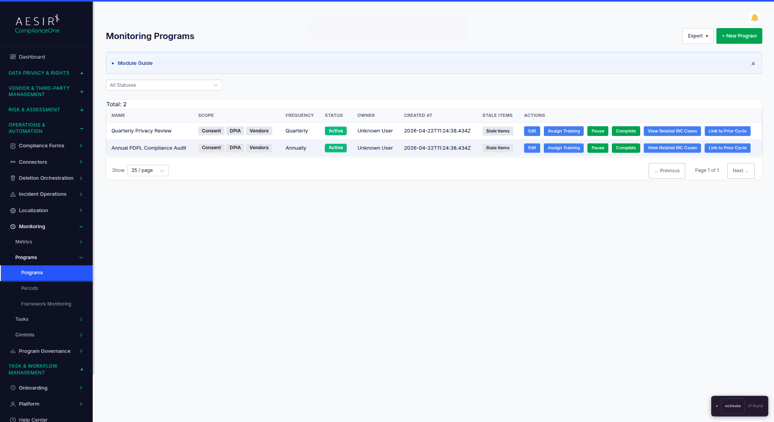
Define monitoring programs with review frequencies and link them to specific regulatory frameworks. Each program captures its scope, responsible parties, and the controls being monitored, creating a structured foundation for ongoing oversight.
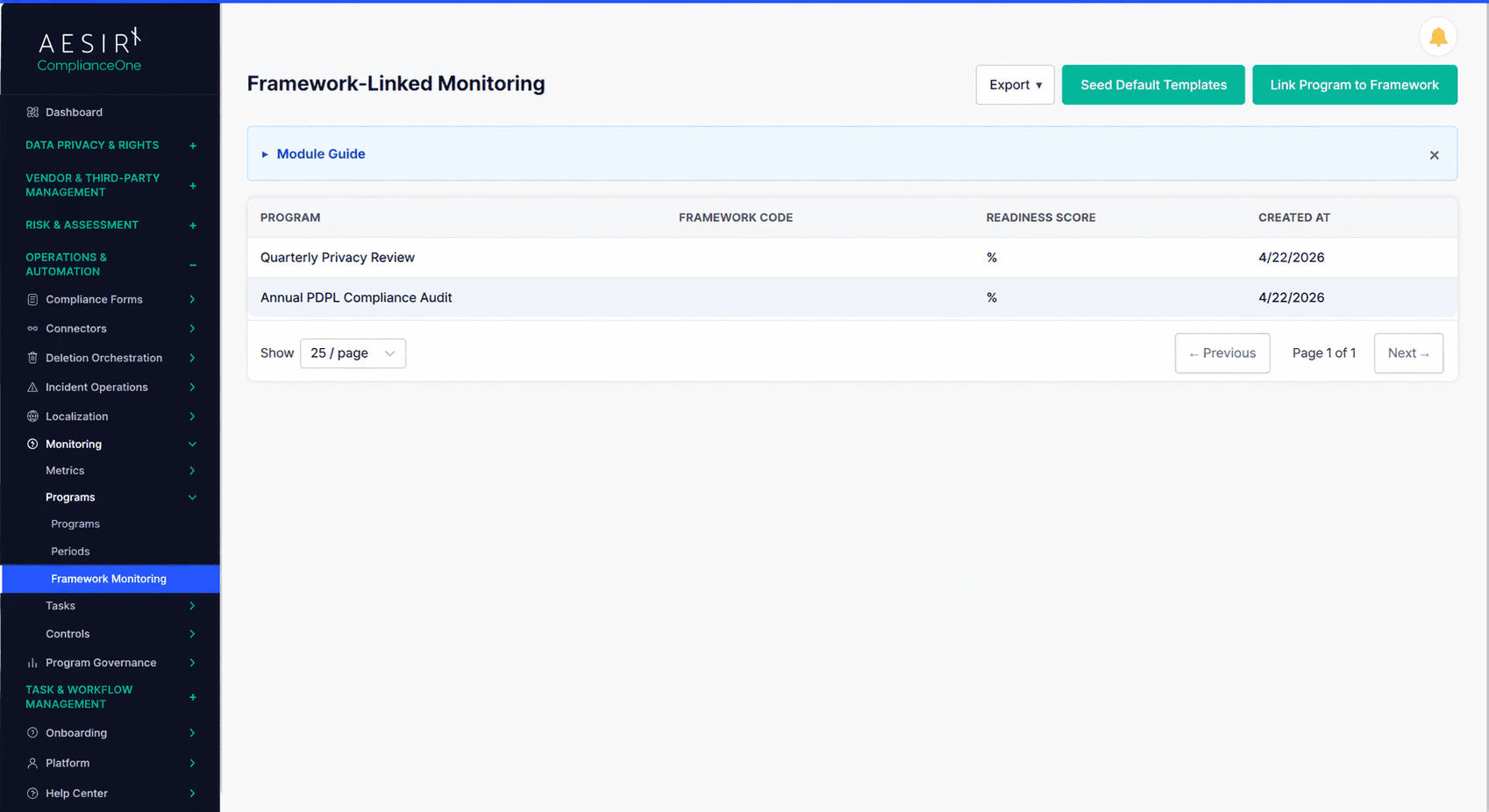
Attach programs to specific regulatory frameworks and generate a readiness score showing how prepared the organization is per framework. Framework linkage ensures that monitoring activities are grounded in actual regulatory obligations, not generic checklists.
Configure recurring monitoring cycles that launch automatically based on defined frequencies. When a cycle is due, the module creates the review tasks and notifies the assigned reviewers, no manual intervention required to keep the compliance calendar running.
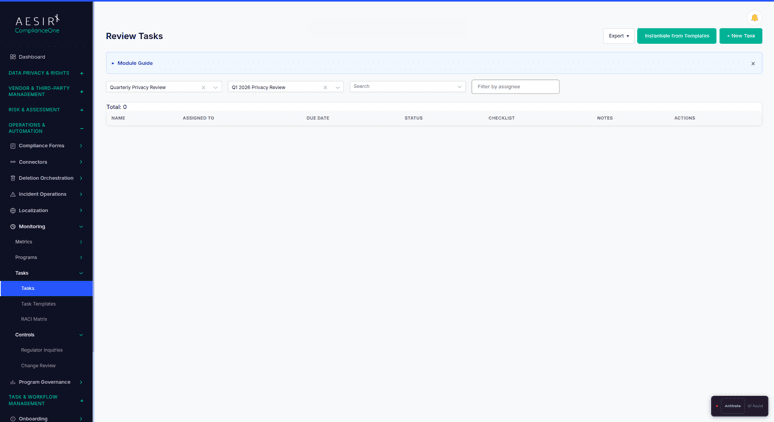
Reusable checklists define the standard activities for each type of review. When a cycle launches, tasks are generated from templates and assigned to the responsible parties. Progress is tracked at the individual task level with status, deadlines, and completion evidence.
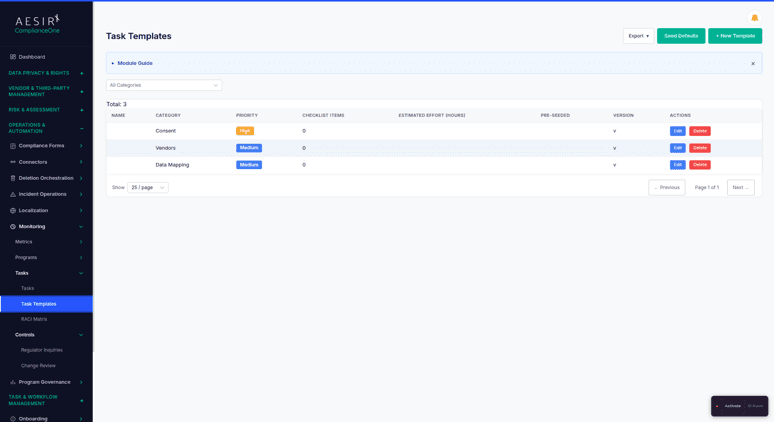
Track completion rates, compliance trends, and review cycle performance over time. The KPI dashboard provides quantitative evidence of whether the monitoring program is improving organizational compliance or whether attention is needed in specific areas.
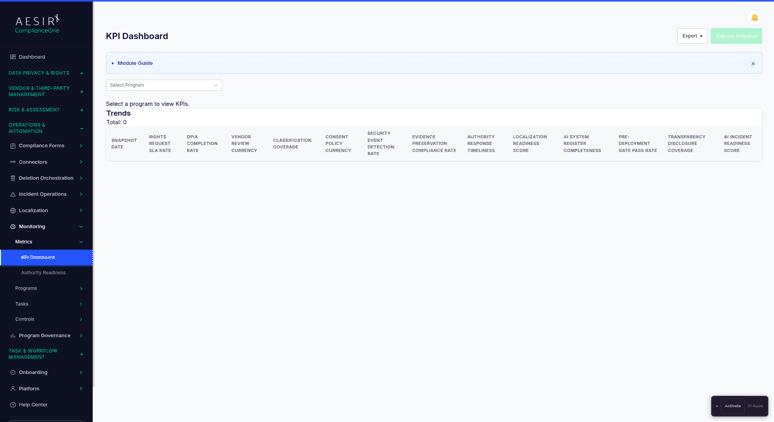
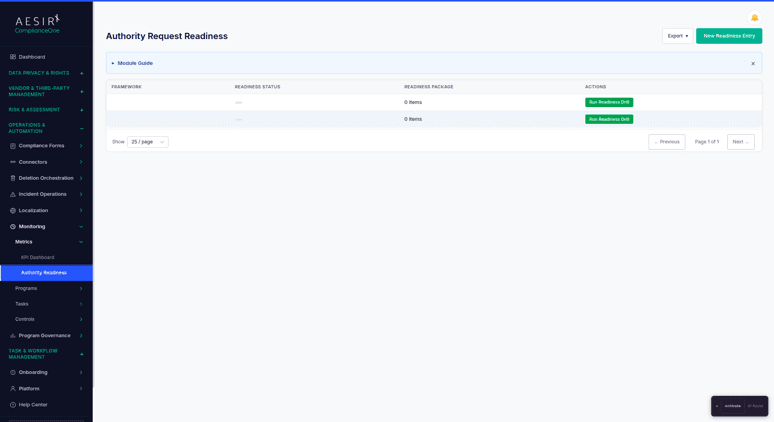
Execute monitoring drills against authority inquiry templates and produce readiness reports. When a regulator requests evidence of compliance monitoring, the readiness view shows what is already prepared and what gaps remain, before the request arrives rather than after.
Dedicated workflows for responding to regulator requests. Ten pre-built RIC templates cover common regulatory scenarios. Each case tracks the inquiry, the evidence assembled, the response prepared, and the outcome, creating a complete record for future reference.
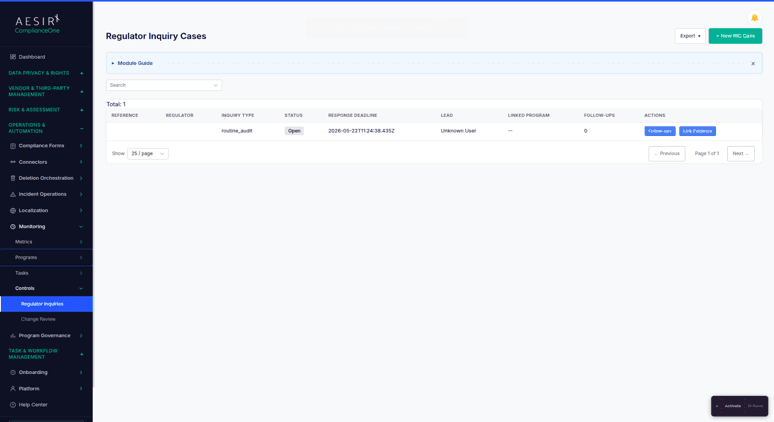
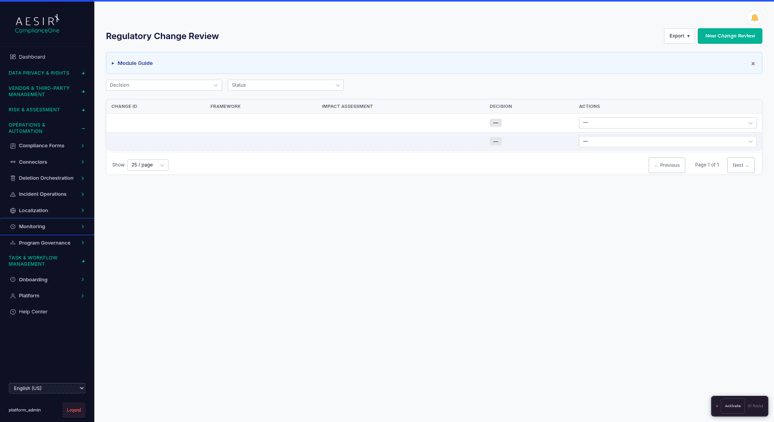
Route program or control changes through an approver sign-off before changes take effect. This ensures that modifications to monitoring scope, frequency, or methodology are reviewed and authorized rather than applied ad hoc.


 Review cycles are scheduled in calendars with no automatic task generation when a cycle is due.
 Auto-cycle scheduling launches review cycles on the configured cadence with automatic task creation.Monitoring activities are disconnected from regulatory frameworks with no readiness scoring per regulation.Framework-linked programs generate readiness scores showing compliance posture per regulation.Regulator inquiries trigger ad hoc evidence gathering with no structured response workflow.Regulator Inquiry Case workflows provide structured response processes with pre-built templates and evidence packaging.Compliance trends are unmeasured, there is no quantitative view of whether the program is improving.KPI dashboards track completion rates and trends to quantify monitoring program effectiveness.Program changes are applied without formal review or approver sign-off.Change review workflows route program modifications through approver sign-off before they take effect.
Framework-linked monitoring with readiness scoring connects every monitoring program to specific regulatory obligations – ensuring that review activities address actual compliance requirements rather than generic checklists.

Auto-cycle scheduling eliminates the manual overhead of launching recurring reviews. When a cycle is due, tasks are generated, assigned, and tracked automatically – keeping the compliance calendar running without intervention.

Ten pre-built Regulator Inquiry Case templates provide structured workflows for responding to common authority requests, so the team is prepared before an inquiry arrives rather than scrambling after.
Supports semiannual review cycles and MPS update decisions with framework-linked monitoring and regulatory change detection.Enables structured monitoring of Decree 356 implementation requirements with auto-cycle scheduling and readiness scoring.Provides ongoing governance monitoring linked to Data Law obligations with KPI tracking and authority request readiness.Supports continuous cybersecurity compliance monitoring with regulator inquiry workflows and evidence packaging for authority cooperation.Ready to see how Monitoring Programs works with your compliance workflows? Request a personalized demo.

Ronni K. Gothard Christiansen - Technical Privacy Engineer & CEO
Technical Compliance Expert, 32+ Years Open Source Advocate, X-BoD Open Source Matters Inc.
You define the monitoring frequency for each program – monthly, quarterly, semiannual, or custom. When a cycle is due, the module automatically creates the review tasks from the configured templates, assigns them to the responsible parties, and begins tracking progress. No manual launch is needed.
Yes. Programs can be linked to one or more regulatory frameworks. The readiness score is calculated per framework, so organizations managing multi-regulation compliance can see their posture across all applicable regulations from a single program.
Regulator Inquiry Cases (RICs) are dedicated workflows for handling authority requests. Each case tracks the inquiry details, evidence collection, response preparation, and outcome. Ten pre-built templates cover common regulatory scenarios to accelerate response times.
The KPI dashboard tracks task completion rates, review cycle performance, and compliance trends over time. This quantitative data provides evidence that the monitoring program is actively improving organizational compliance – useful for board reporting and regulatory inspections.
The Regulatory Change Management workflow (UC-VN-15) supports detecting material changes, assessing their impact on existing monitoring programs, and routing affected modules and owners for review. When a change warrants an update, the change review workflow ensures modifications go through approver sign-off.
Explore the module architecture, then speak with us about the workflows your organization needs to operationalize first.

Test Monitoring Programs with your actual frameworks – auto-scheduling, KPI tracking, and readiness scoring included.

Walk through your monitoring program requirements and see how the module fits your regulatory obligations.


The evolution of Aesir is Aesir +  (the Norse symbol for Necessity)"Needed in order to achieve a particular result"
♥Join the AesirX Privacy Newsletter. Stay Informed. Stay Compliant.


 Vietnam Personal Data Protection Law
 Vietnam Data Law
  Vietnam Cybersecurity Law 2025