
DPO Radio

 GOVERNANCE
Complete vendor lifecycle management – onboarding, DPA review, periodic checks, drift detection, and verified offboarding in one module.

Organizations that process personal data through third-party vendors face a growing chain of compliance obligations. Under the Vietnam PDPL and Decree 356, data controllers remain responsible for how sub-processors handle personal data, even when that processing happens outside company walls. Without structured vendor oversight, responsibility gaps multiply with every new supplier relationship.
Cross-Border Transfer and Vendor Governance Leads (P-VN-08) are tasked with tracking dozens (sometimes hundreds) of vendor relationships, each with its own DPA status, review schedule, and compliance posture. When this work lives in spreadsheets and email threads, review deadlines slip, DPA sign-off stalls, and offboarding happens informally, leaving data in vendor systems long after the relationship has ended.
The consequences are tangible: vendors operating without current DPAs, sub-processors unknown to the compliance team, and no reliable way to demonstrate oversight during a regulatory inspection. Compliance drift goes undetected until an audit surfaces gaps that should have been caught months earlier.
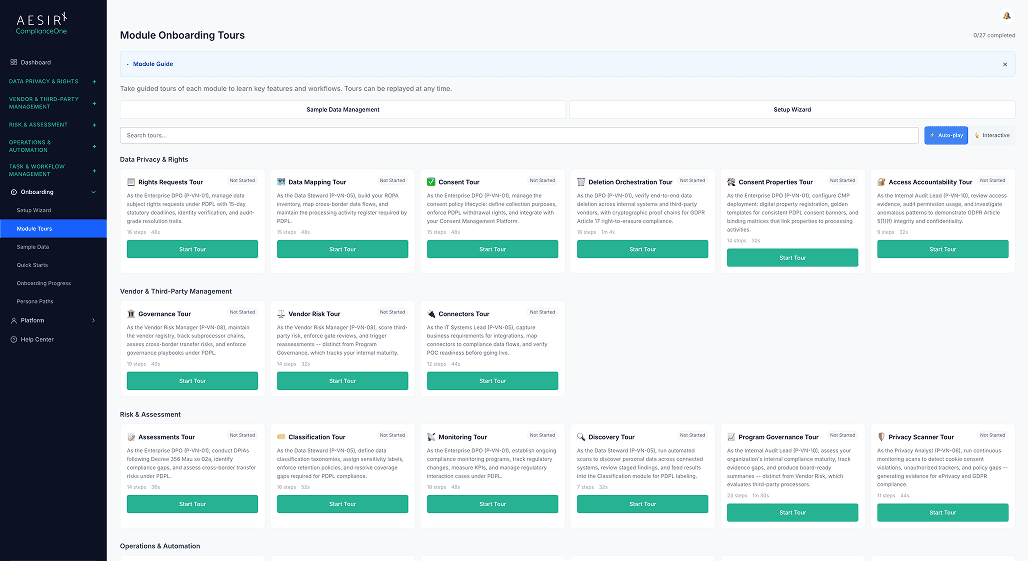
Vendor Governance addresses this by providing a single register for all vendors and sub-processors, a structured onboarding pipeline with DPA review and security assessment workflows, periodic review scheduling with automatic triggers, drift detection that surfaces compliance changes as they happen, and a formal offboarding process that verifies data return or deletion before a relationship is closed. The module serves Cross-Border Transfer and Governance Leads managing vendor onboarding, third-party risk reviews, and change impact assessments across the procurement and compliance functions.
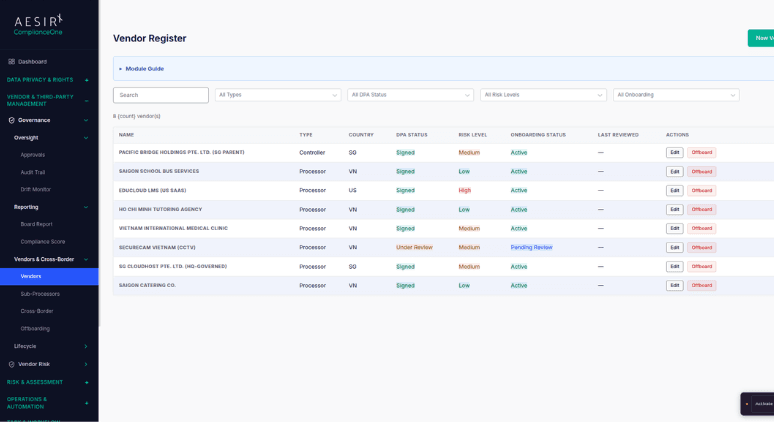
A comprehensive database of all vendors with contact details, contract information, and current compliance status. Every vendor relationship is visible in one place, eliminating the need to cross-reference multiple spreadsheets or systems.
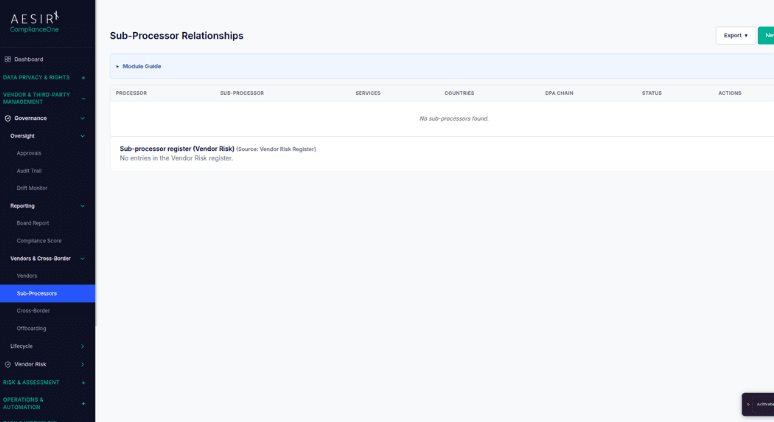
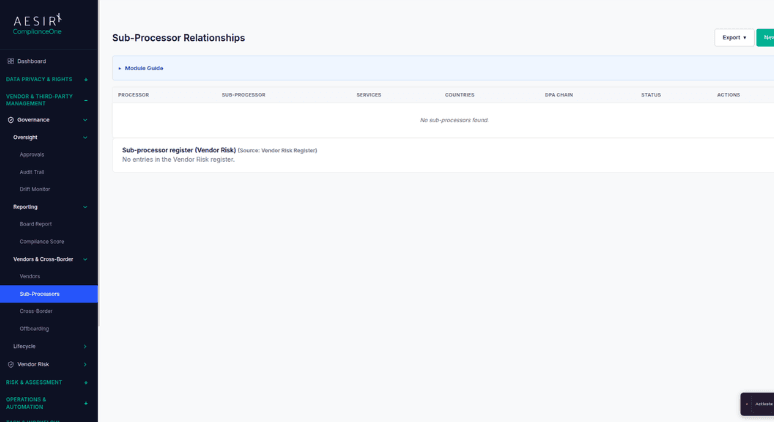
Track downstream processors and their compliance obligations. When a vendor engages its own sub-processors, this view maintains the chain of responsibility so nothing falls outside your compliance scope.
Move vendors through defined stages – from initial contact to approved supplier – with clear status progression at each step. The pipeline ensures no vendor begins processing data before all compliance prerequisites are met.
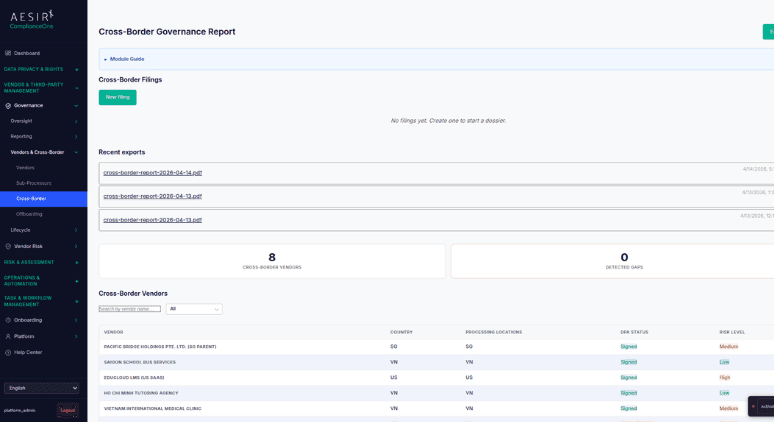
Document international data transfers with the legal mechanisms that authorize them. Transfer records link directly to the vendor and sub-processor entries that are involved.
administrator.
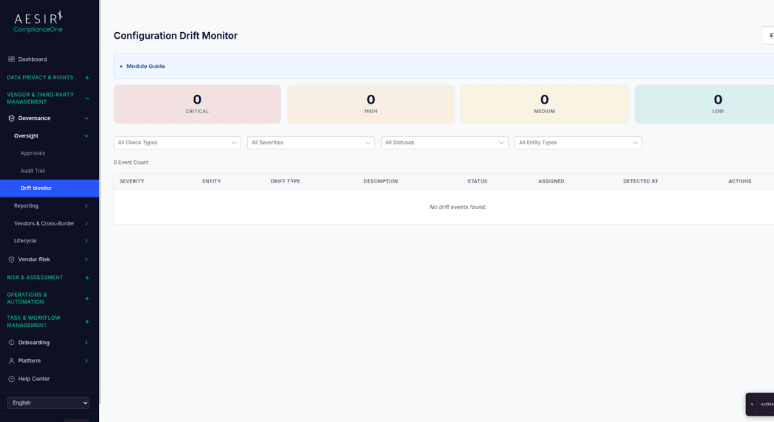
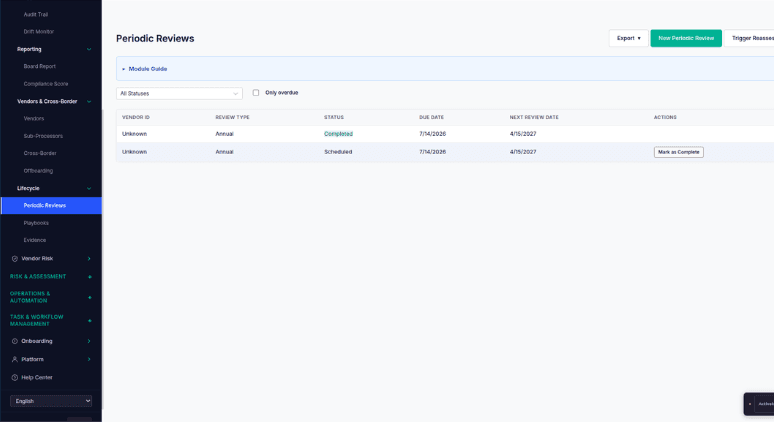
Automated monitoring surfaces compliance drift as it happens – a lapsed certification, a missed review, or a changed sub-processor arrangement. Triage workflows route each drift event to the right person for resolution.
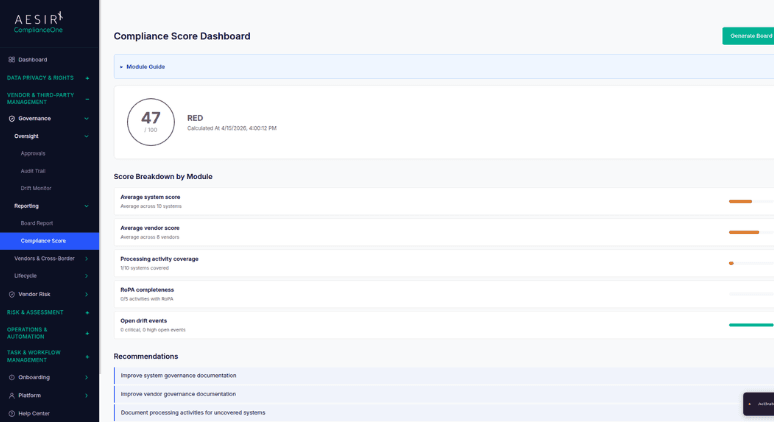
Risk-based scoring assigns each vendor a compliance score based on DPA status, review history, drift events, and assessment results. Scores enable prioritization so the team focuses attention where risk is highest.
Configure review frequencies per vendor with automatic triggers. When a review is due, the module creates the review task and notifies the assigned reviewer, no manual calendar management required.
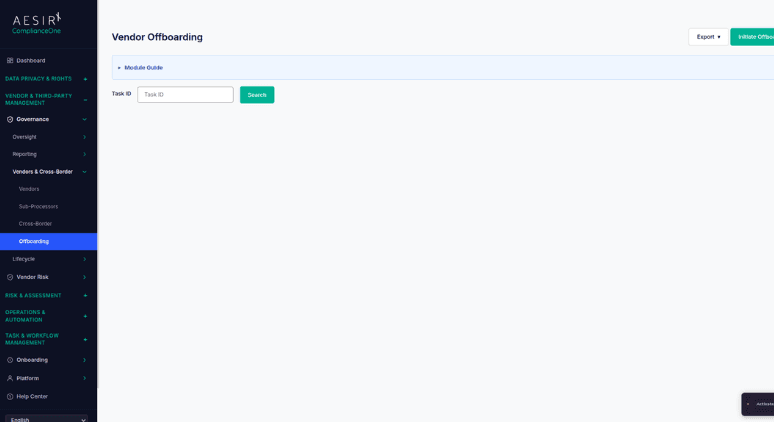
A formal offboarding workflow verifies data return or deletion before a vendor relationship is closed. The offboarding record captures confirmation evidence so the organization can demonstrate proper closure during audits.
 Vendor DPA status tracked in spreadsheets with no automatic reminders when reviews are overdue.
 Every vendor and sub-processor is registered with current DPA status and compliance scoring visible at a glance.Sub-processor relationships discovered only during audits, not when they are established.Structured onboarding pipeline ensures no vendor processes data before all prerequisites are complete.Offboarding happens informally with no verified confirmation that data has been deleted or returned.Periodic review scheduling triggers automatic reassessments on the configured cadence.Compliance drift in vendor arrangements goes undetected until a regulatory inspection surfaces it.Drift detection surfaces compliance changes as they happen with triage routing to the responsible reviewer.Onboarding approvals stall in email chains with no visibility into where sign-off is pending.Formal offboarding workflow captures verified confirmation of data return or deletion before relationship closure.
The Vendor Register, Sub-Processor Management, and Cross-Border Transfer views provide end-to-end visibility across the full vendor ecosystem – from direct suppliers to their downstream processors and the international transfers they perform.

The structured onboarding pipeline with DPA review and security assessment workflows ensures every vendor passes through documented compliance gates before activation, creating an auditable record of due diligence for each relationship.

Drift detection and periodic review scheduling work together to keep the vendor compliance picture current – surfacing changes proactively rather than relying on manual checks that may be delayed or missed.
Manages sub-processor oversight, cross-border transfer documentation, and DPA lifecycle as required for data controller accountability under the PDPL.Supports structured vendor onboarding, periodic review scheduling, and evidence collection aligned with Decree 356 implementation requirements for third-party data processing.Ready to see how Vendor Governance works with your compliance workflows? Request a personalized demo.

Ronni K. Gothard Christiansen - Technical Privacy Engineer & CEO
Technical Compliance Expert, 32+ Years Open Source Advocate, X-BoD Open Source Matters Inc.
The Sub-Processor Management view maintains a registry of downstream processors linked to each vendor. When a vendor declares a new sub-processor, the relationship is recorded with compliance obligations so the full processing chain remains visible.
The structured onboarding pipeline moves vendors through defined stages from initial contact to approved supplier. Each stage captures the required sign-offs and documentation so the pipeline reflects your organization's approval process.
The module monitors vendor compliance posture for changes – lapsed certifications, missed periodic reviews, or altered sub-processor arrangements. When drift is detected, a triage workflow routes the event to the assigned reviewer for resolution.
The offboarding workflow verifies that the vendor has returned or deleted personal data before the relationship is formally closed. Confirmation evidence is captured and stored so the organization can demonstrate proper closure during regulatory inspections.
Every vendor interaction – onboarding approval, DPA sign-off, periodic review, drift resolution, and offboarding confirmation – is recorded with timestamps and actors. This audit trail, combined with compliance scoring and evidence management, provides inspection-ready documentation.
Explore the module architecture, then speak with us about the workflows your organization needs to operationalize first.

Test Vendor Governance with your real vendor portfolio – onboarding, reviews, and drift detection included.

Talk through your vendor oversight requirements and see how the module fits your compliance program.

The evolution of Aesir is Aesir +  (the Norse symbol for Necessity)"Needed in order to achieve a particular result"
♥Join the AesirX Privacy Newsletter. Stay Informed. Stay Compliant.


 Vietnam Personal Data Protection Law