

DPO Radio

PRIVACY POLICY
This feature turns real scan data into a structured Privacy Policy draft, showing what your site actually does so you can review, refine, and publish confidently.

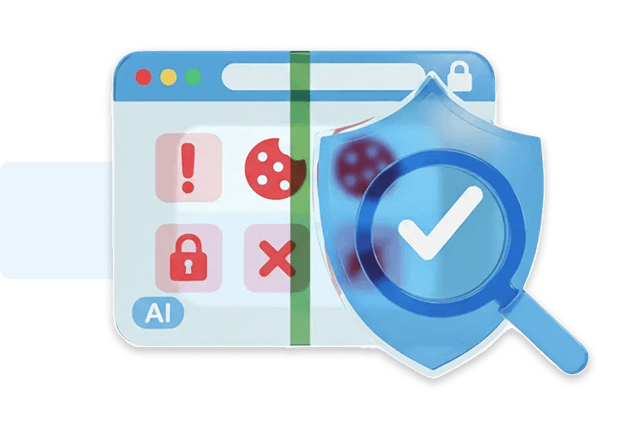
Writing a Privacy Policy from scratch is time-consuming and often inaccurate because most drafts rely on guesswork. Websites change frequently, plugins evolve, and many tools load additional cookies, domains, and beacons that site owners never realize are active. Keeping documentation aligned with real behavior becomes challenging, especially when managing multiple sites or handling updates across teams.
AesirX’s AI Privacy Advisor uses scan data from before and after consent to create a structured draft Privacy Policy that reflects the technologies your site actually loads. It identifies domains, cookies, and beacons detected during the scan and outlines their roles, legal bases, and data flows. This gives you a clear starting point rooted in behavior rather than assumptions, reducing the risk of overlooking technologies that affect transparency requirements.
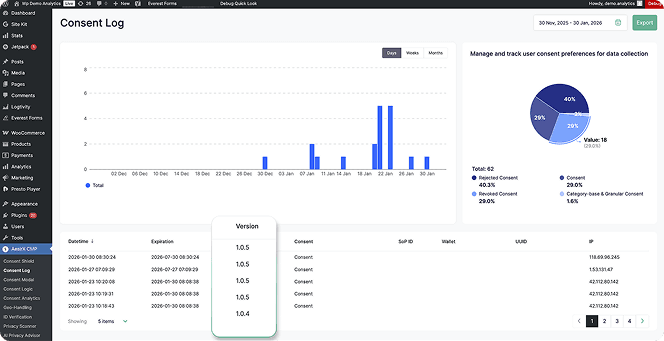
You review and update the draft to match your exact data practices. In CMP Pro, Privacy Policies are versioned, and any change to the policy automatically revokes previous consents, prompting users to provide fresh consent aligned with the latest content. AI Privacy Advisor can also automatically create and update Privacy Policy pages in WordPress, removing manual setup and ongoing copy updates. The result is a faster, more reliable workflow that supports consistent documentation and keeps your Privacy Policy closer to your real environment.
Built for organizations where data protection meets performance

behavior-based drafts for faster client documentation.

Clear summaries of tracking used for analytics or marketing.

Structured drafting aligned to detected data flows.

Reflects ad-tech and analytics behavior clearly in policy drafts.

Summarizes data flows in a clean, policy-ready structure.

Outlines non-essential tracking in a structured draft for review.

Provides behavior-based inputs for privacy evaluations.

Documents booking, analytics, and media tools based on real behavior.
The AI Privacy Advisor uses the privacy scans to generate an editable Privacy policy draft.

The AI Privacy Advisor uses the scan data (from before and after consent) to map cookies, domains, and beacons, outline detected data flows, and produce a structured Privacy Policy draft you can revise to match your real practices.
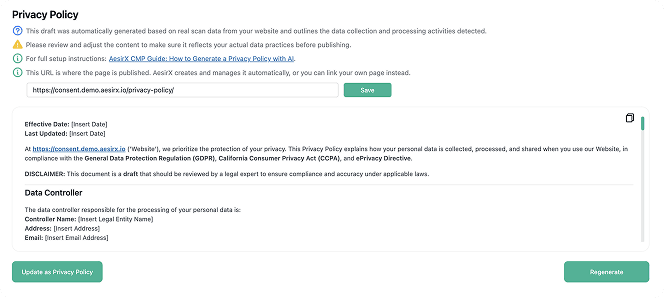
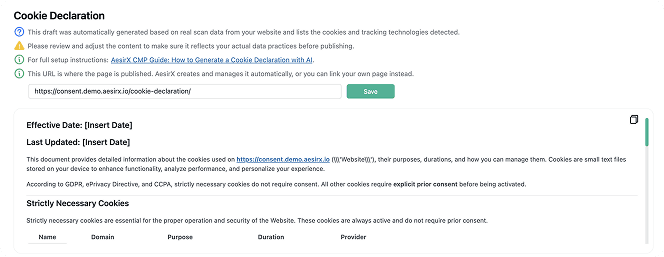
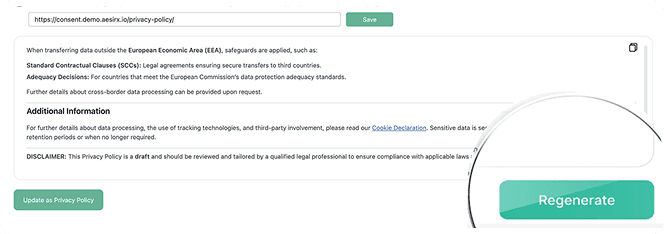
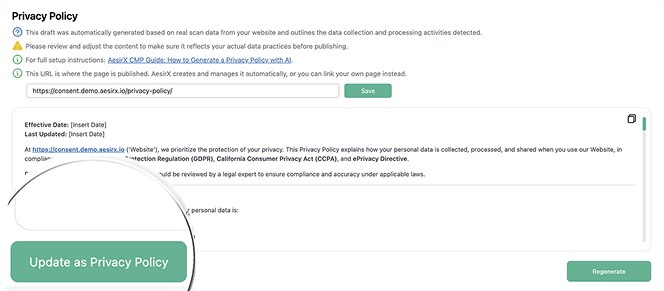
 Use the Copy button to export the text if you prefer to manually update your own Privacy Policy page or use a custom setup.
Note that AI Auto-Blocking works for plugins and scripts loaded through WordPress’ standard architecture. Scripts hardcoded in theme files are not detected and must be added to blocking rules manually


 Manual policy writing
 Draft built from scan resultsInformation becomes outdatedAligned with actual behaviorMissing real data practicesIncludes detected technologiesHard to map technologiesClear, structured sectionsSlow, inconsistent updatesFast, repeatable updates
 Behavior-aligned drafting
 Structured documentation
 Real-data transparency
AesirX CMP for WordPress v1.9.0 introduces automated scanning and blocking of cookies and beacons using the new AI Privacy Advisor feature.
READ MORE
AesirX CMP JS 1.0.0 brings first-party consent control to any platform, delivering faster, compliant, and privacy-first data management for all websites.
READ MORE
Explore the AesirX Consent Management Platform Features Guide to configure tracking, block scripts, and stay compliant with global privacy laws.
READ MORE



AI Privacy Advisor generates a full Privacy Policy draft built from your site’s scan results. The draft includes controller details, the types of data collected through tracking technologies, cookie and domain activity, legal bases, third-party services, retention periods, user rights, and international transfers. Because the document is produced from behavior-based scanning, every section reflects actual technologies loading on the site rather than assumptions or generic templates.
The feature produces a scan-based privacy policy that describes data collection, legal bases, and detected technologies in a structured format. This makes it easier to explain how your site operates in practice, improving clarity around cookies, third-party tools, and data flows without relying on generic templates.
It covers the data collected or accessed through the cookies, domains, scripts, and beacons identified during your scan and maps this information to the correct sections of the draft. If your site handles additional data through forms, accounts, purchases, or server-side systems, you can expand those parts manually. The tool focuses on automated privacy documentation for tracking-related activity that triggers data collection or device access under ePrivacy Directive 5(3).
The draft is detailed and based on real behavior, but it still needs your review so it reflects your complete data practices. The tool documents what tracking technologies collect or access on the device and where those flows go, but only you can describe what happens after that data enters your systems. You must add information about how your organisation processes, uses, and stores the data, any downstream activities such as profiling or analytics, internal sharing, operational purposes, and any systems involved. The generated draft gives you a strong, structured starting point, and you complete it to match your actual processing operations.
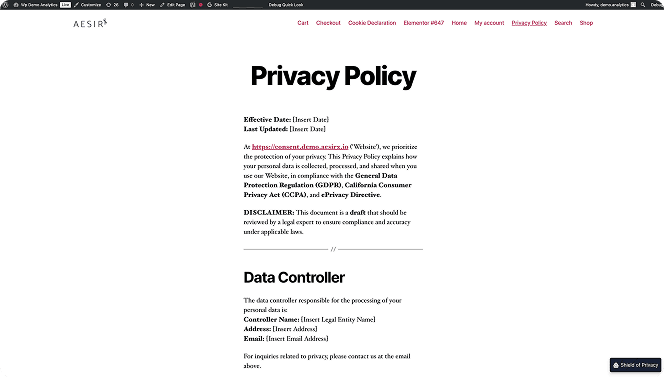
In AI Privacy Advisor, on first use, clicking Regenerate automatically creates a Privacy Policy page in WordPress and fills it with structured content based on real scan data. The generated page URL is added to the CMP so future updates can be applied automatically.
When scans are regenerated or content is saved, the Privacy Policy page is refreshed to reflect the latest detected cookies, domains, and data flows.
Agencies can also replace the generated URL with their own existing Privacy Policy page if they prefer to use custom layouts or content structures. This allows agencies to deploy compliant documentation faster, keep policies aligned with changing site behavior, and manage updates consistently across multiple client sites.
Run a new scan so the Privacy Policy updates to match the latest tracking behavior. The feature refreshes the draft using real scan data, which keeps the sections on cookies, domains, and data flows aligned with how your site currently operates.

The evolution of Aesir is Aesir +  (the Norse symbol for Necessity)"Needed in order to achieve a particular result"
♥Join the AesirX Privacy Newsletter. Stay Informed. Stay Compliant.