

DPO Radio
 E-COMMERCE TAX COMPLIANCE OVERLAY [ACTIVE]
Support evidence operations under Decrees 117/2025 and 70/2025 without turning ComplianceOne into a tax-calculation product.

Decree 70/2025/NĐ-CP has applied since 1 June 2025 to the amended invoice and document framework. Decree 117/2025/NĐ-CP has applied since 1 July 2025 to tax administration for household and individual business on e-commerce and digital platforms.
This optional process overlay is deliberately narrow. It supports evidence around platform roles, seller data, transactions, reconciliation, e-invoices, regulator-issued artifacts, and authority responses. It does not calculate tax, determine liability, or provide tax advice.
The Decree 117/2025/NĐ-CP artifacts preserve their different audiences and purposes, including two similarly numbered documents. Decree 70/2025/NĐ-CP forms that require further exact-source implementation are not reproduced incompletely.
Relevant e-commerce and digital platform managers, seller platforms, e-invoice operators, and reconciliation teams.
Identity, status, transactions, source systems, and accountable data provenance.
Orders, payments, refunds, adjustments, seller records, artifacts, and acknowledgements.
Issuance, codes, parties, adjustment or replacement, transmission, status, and retention.
Seven verified Decree 117 declarations, schedules, certificates, and refund-request artifacts.
Evidence management only; no tax calculation, tax advice, or automatic liability decision.
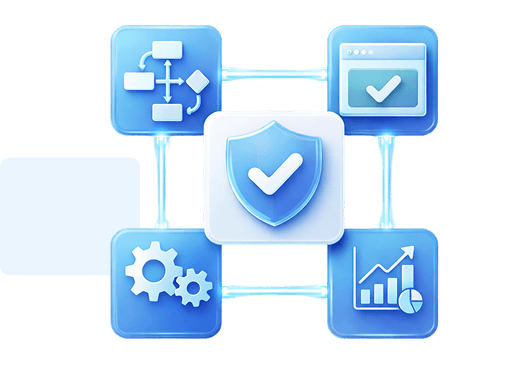
Teams can connect seller identity, orders, payments, refunds, adjustments, e-invoice events, and source-system provenance. Reconciliation records make discrepancies and approvals reviewable.
Verified artifacts can be associated with the correct audience, period, supporting records, channel, and acknowledgement. Human owners remain responsible for tax determinations and submissions.
 Compliance Forms
Organizes verified Decree 117 artifacts and supporting evidence.
Explore Compliance Forms Audit Trail
Preserves source, adjustment, submission, and acknowledgement history.
Explore Audit Trail

 Seller and transaction records do not reconcile consistently.
 Connect seller, transaction, payment, and invoice evidence.Invoice adjustments are separated from source events.Track discrepancies, review, adjustment, and approval.Similar form numbers create selection risk.Preserve artifact audience and purpose distinctions.Authority responses lack a shared evidence trail.Keep tax conclusions under accountable human control.
Seller identity, orders, payments, and e-invoice events reconcile on one record, so a discrepancy between what a platform reports and what a seller invoiced is visible and reviewable rather than buried across separate exports.

Official Decree 117 declarations and schedules are prepared in the same workspace as the transaction evidence behind them, kept visually distinct from platform-prepared working papers so a filer never mistakes one for the other.

Tax determinations and submissions stay with accountable people and their advisers; ComplianceOne organizes the supporting evidence and reconciliation history rather than calculating liability or filing on an organization's behalf.
See how ComplianceOne connects seller, transaction, e-invoice, artifact, and response evidence.

Ronni K. Gothard Christiansen - Technical Privacy Engineer & CEO
Technical Compliance Expert, 32+ Years Open Source Advocate, X-BoD Open Source Matters Inc.
No. This overlay organizes operational evidence and verified artifacts. Tax liability, calculations, advice, and filing decisions remain with accountable teams and advisers.
Seven verified declarations, schedules, certificates, and refund-request artifacts are included with their audience and purpose distinctions preserved.
The Decree 117 appendix includes a non-resident individual declaration and a separate refund-request document with similar numbering. ComplianceOne keeps them distinct.
Yes. Teams can connect orders, payments, refunds, adjustments, seller records, invoice events, supporting artifacts, and acknowledgements.
No. Direct use depends on the platform’s role and relevant tax-administration or e-invoice processes. Reference-only installation is available otherwise.

Test seller-data, transaction, reconciliation, e-invoice, and artifact evidence for one period.

Review platform roles, data sources, reconciliation, artifacts, and accountable approvals.


The evolution of Aesir is Aesir +  (the Norse symbol for Necessity)"Needed in order to achieve a particular result"
♥Join the AesirX Privacy Newsletter. Stay Informed. Stay Compliant.
 Data Mapping
 Task Management