

TL;DR: A cookie banner and privacy policy are only a visible layer of cookie compliance. Organizations need to be able to identify what is loaded on its website, classify cookies and tracking technologies correctly, justify the purpose and legal basis, configure the CMP and tag blocking properly, and document the evidence behind every decision.
That gap between legal expectation and technical reality is where most organizations fail. That is why I am introducing a new AesirX service: Cookie Compliance Training & Review - a practical training and review session for DPOs, legal teams, privacy teams, internal audit, marketing, web teams, and technical teams.
The problem is not that companies have no cookie banner
Cookie banners are now commonplace across business websites. That’s not the same as having cookie compliance.
A banner can exist while the website is still loading advertising pixels before consent.
A CMP can be installed while the categories do not match the actual tracking technologies on the site.
A privacy policy can say one thing while Google tags, Meta pixels, analytics scripts, embedded tools, retargeting platforms, heatmaps, chat widgets, and third-party scripts do something else.
That is the real issue.
“A cookie banner can exist while the website is still doing the wrong thing.”
Cookie compliance is not solved in the policy document. It is solved in the operational connection between:
-
what the website actually loads,
-
how tracking technologies are classified,
-
how consent choices are presented,
-
how tags are blocked or allowed,
-
how decisions are justified,
-
and how evidence is maintained.
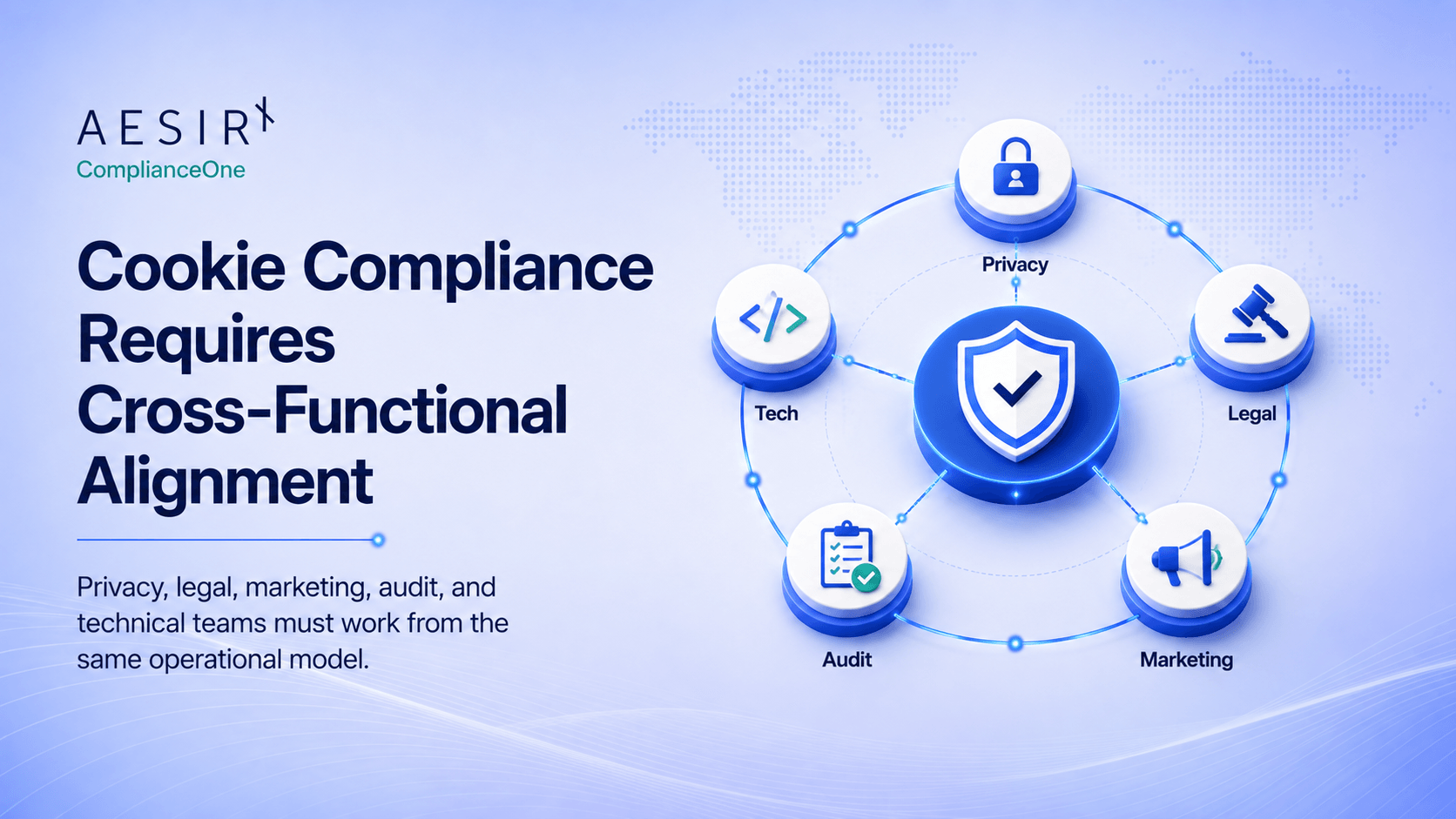
This is where legal, privacy, marketing, audit, and technical teams often talk past each other.
The legal team understands the regulatory requirement.
The marketing team understands why tools are being used.
The web team understands how scripts and tags are implemented.
The DPO or privacy team is left trying to reconcile all of it into something defensible.
That is not a banner problem.
That is a governance problem.
“Cookie compliance” is no longer only about cookies
The word “cookie” is now too narrow.
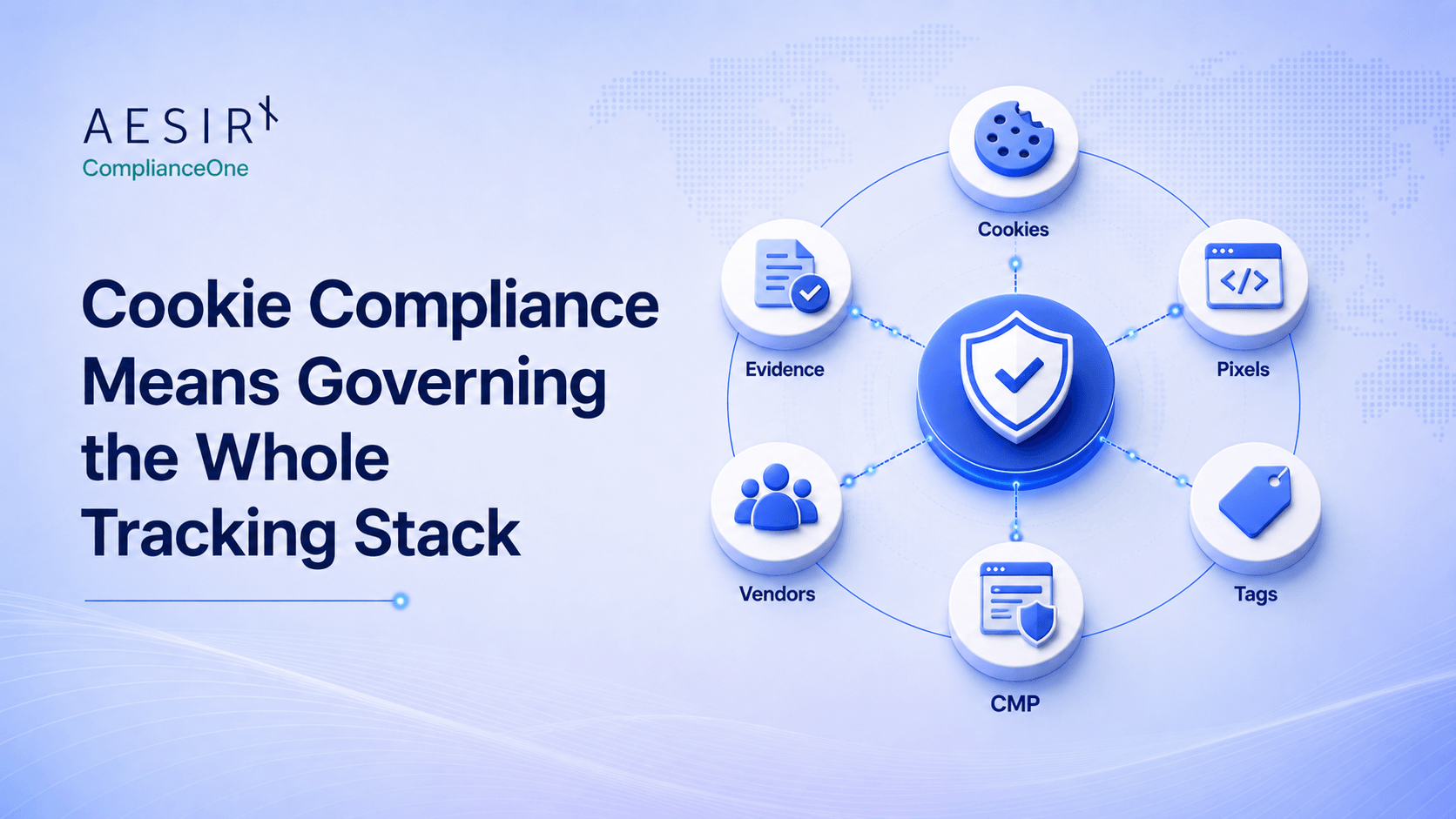
Most website tracking environments include more than cookies.
They include:
-
pixels,
-
tags,
-
JavaScript libraries,
-
analytics scripts,
-
advertising technologies,
-
embedded third-party tools,
-
session identifiers,
-
fingerprinting risks,
-
consent signals,
-
server-side tracking,
-
marketing automation scripts,
-
and vendor-controlled data flows.
“The word ‘cookie’ is now too narrow. Modern website tracking lives in pixels, scripts, tags, identifiers, vendors, and consent signals.”
Some are strictly necessary.
Some support functionality.
Some provide analytics.
Some support advertising or retargeting.
Some create vendor exposure.
Some trigger cross-border data considerations.
Some should not load before consent.
Some should not be on the site at all.
The operational challenge is not simply to detect them. The challenge is to understand them well enough to classify, justify, control, and evidence them.
That is where the practical gap appears
The real compliance question
The question is not: “Do we have a cookie banner?”
The question is: “Can we explain and evidence what our website is doing?”
That means an organization should be able to answer:
-
What cookies, pixels, trackers, scripts, and tags are active?
-
Which ones load before consent?
-
Which ones load after consent?
-
Which vendors receive data?
-
Which categories are used in the CMP?
-
Are “Reject All” and “Accept All” presented fairly?
-
Are analytics, functional, advertising, and strictly necessary technologies separated correctly?
-
Is the CMP actually blocking what it claims to block?
-
Can the organization explain why each classification decision was made?
-
Is there evidence behind the decision?
If the answer is no, the organization does not have an operationally mature cookie compliance setup. It has a front-end banner. That is not enough.
“The real question is not whether the website has a banner. The real question is whether the organization can explain and evidence what the website is doing.”
Why this matters for DPOs and privacy teams
DPOs and privacy teams are often expected to sign off on cookie and tracking decisions without having full visibility into the technical reality.
That is a weak position.
A DPO cannot assess website tracking properly if the only input is a spreadsheet exported from a scanner or a generic cookie declaration.
The privacy team needs to understand:
-
what the scan actually found,
-
what the website actually loads,
-
what the CMP actually controls,
-
what the tag manager actually fires,
-
what vendors are involved,
-
what evidence supports the classification,
-
and what risks remain unresolved.
Privacy teams do not need to become full-stack developers. But they do need enough technical understanding to ask the right questions.
That is the point of technical privacy engineering. It bridges legal interpretation and implementation reality.
Why this matters for legal teams
Legal teams are often asked to advise on consent, legitimate interest, necessary technologies, analytics, advertising, vendor disclosures, and cross-border risk.
But legal advice becomes fragile if it is based on assumptions about what the website does.
A legal team may approve wording for a privacy policy or cookie notice.
But if the actual implementation does not match the notice, the organization still has a problem.
Legal teams need a practical way to connect legal requirements to:
-
cookie categories,
-
CMP settings,
-
consent UX,
-
reject and accept flows,
-
technical blocking,
-
vendor disclosures,
-
data processing evidence,
-
and internal accountability.
That is why cookie compliance cannot sit only with legal. It has to become operational.
Why this matters for marketing teams
Marketing teams are not the enemy of privacy.
But marketing tools are often where the highest tracking risk enters the website.
Campaign pixels, retargeting tags, conversion APIs, analytics tools, embedded forms, CRM integrations, and advertising platforms can all create personal data processing and vendor exposure.
The marketing team needs clarity on:
-
which tools are allowed,
-
which tools require consent,
-
which tools must be blocked before consent,
-
what happens when a user rejects,
-
how conversion tracking can be configured responsibly,
-
and what alternatives exist when third-party tracking creates unnecessary risk.
A good compliance process should not simply say “no” to marketing. It should help the organization understand what can be done, what must be changed, and what should be replaced.
That is how privacy becomes an enabler instead of a blocker.
Why this matters for web and technical teams
Technical teams are often handed privacy requirements that are too abstract.
“Make the site compliant.”
“Fix the cookie banner.”
“Block trackers before consent.”
“Make sure analytics is compliant.”
That’s not enough.
Web and technical teams need clear operational requirements:
-
which tags must be blocked,
-
which categories map to which scripts,
-
which CMP events control which behavior,
-
what should happen on reject,
-
what should happen on accept,
-
how regional rules should work,
-
how consent signals should be stored,
-
and how changes should be documented.
Without that clarity, teams improvise.
Improvisation is not governance.
The consent banner itself can be a compliance signal
A cookie banner is not neutral.
The design of the banner tells you a lot about the organization’s privacy maturity.
If “Accept All” is bright green and “Reject All” is hidden behind settings, that is not privacy by design.
If “Customize” is clear but rejection requires several clicks, that is not balanced choice.
If the user is pushed toward acceptance through color, layout, friction, or wording, the banner becomes part of the risk.
“If ‘Reject All’ is hidden and ‘Accept All’ is highlighted, the banner is not a privacy control. It is a conversion tool.”
A mature consent flow should make meaningful choices understandable and accessible.
→ Reject should be real.
→ Accept should be real.
→ Customize should be useful.
And the technical behavior should match the user’s decision.
That last part is where many setups fail; A banner may say the user rejected. The website may still load third-party tracking.
That is not consent management. That is consent theatre.
This is now a global issue, not only an EU issue
For many years, cookie compliance was treated primarily as a European GDPR and ePrivacy issue.
That is outdated.
The operational reality of website tracking now matters across multiple markets.
US privacy laws have increased scrutiny around targeted advertising, sale/share concepts, sensitive data, pixels, and consumer choice mechanisms.
Vietnam is also moving quickly into a more structured data governance and personal data protection environment. Vietnam’s Data Law is now in effect, and the new Personal Data Protection Law became effective on 1 January 2026. For Vietnam-facing businesses, this makes website tracking, consent, data governance, vendor control, and evidence increasingly relevant.
The legal details differ by region.
But the operational questions are similar:
-
What data is collected?
-
Why is it collected?
-
Which technologies collect it?
-
Which vendors receive it?
-
What choices were given?
-
What was blocked?
-
What was allowed?
-
What evidence exists?
Those are not EU-only questions. They are modern digital governance questions.
The five operational maturity markers for cookie compliance
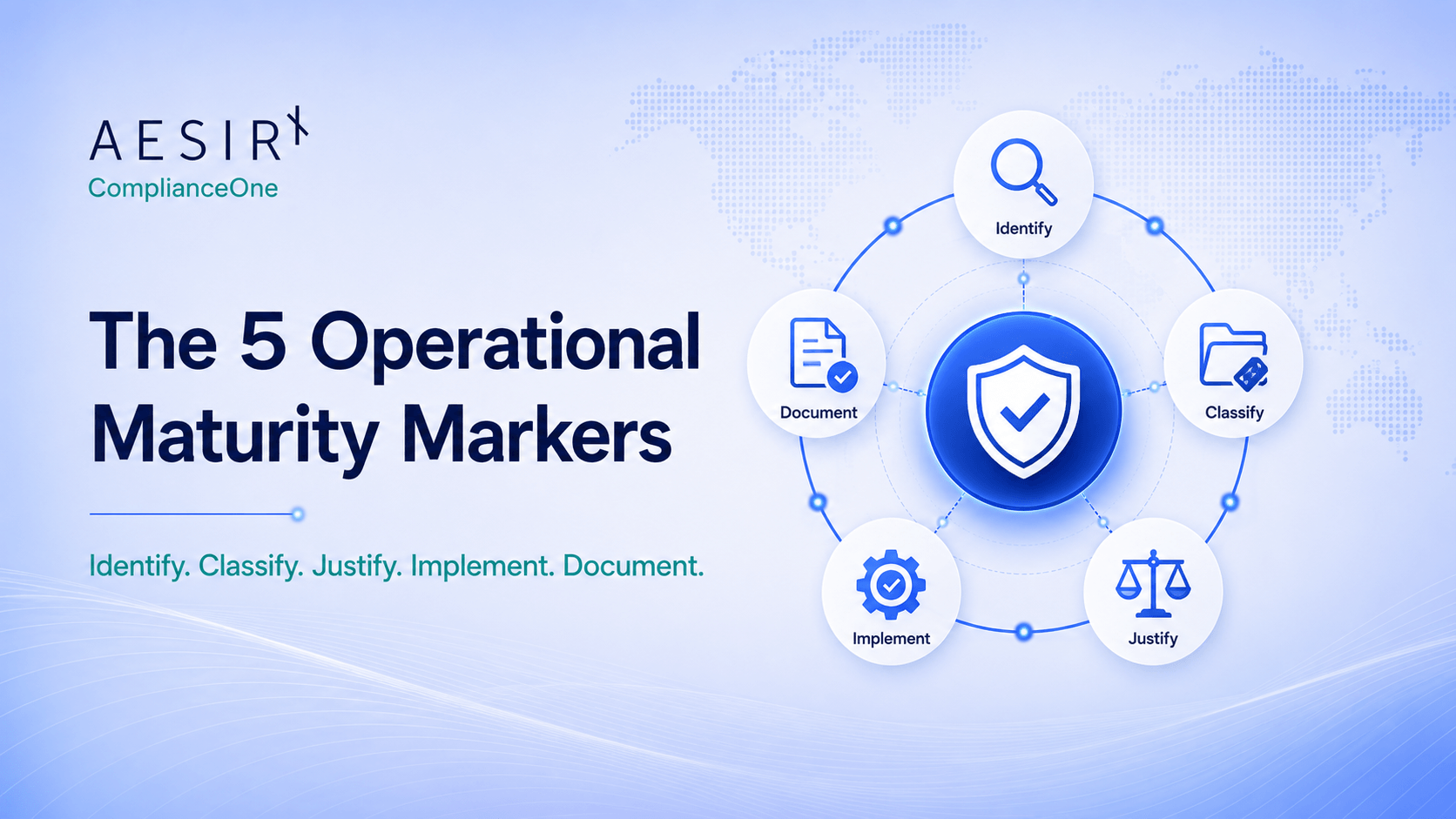
The way I look at cookie compliance is simple. A mature organization should be able to do five things.
1. Identify
You cannot govern what you cannot see.
The first step is to identify cookies, pixels, trackers, scripts, tags, embedded tools, analytics services, advertising technologies, and third-party services loaded through the website.
This includes what loads before consent and what loads after different consent choices.
A single scan is useful. But it is not enough. Teams need to understand how the site behaves in real use.
2. Classify
Once tracking technologies are identified, they need to be classified.
Not guessed. Classified.
That means understanding purpose, type, vendor, region, risk, and operational role.
→ Is it strictly necessary?
→ Is it analytics?
→ Is it functional?
→ Is it preference-based?
→ Is it advertising?
→ Is it retargeting?
→ Is it third-party enrichment?
→ Is it connected to a vendor that receives personal data?
Classification is where legal and technical teams must meet.
3. Justify
Classification without justification is weak.
The organization needs to be able to explain why a technology sits in a particular category.
A “strictly necessary” classification should not be used as a dumping ground for anything the business wants to keep.
Analytics should be separated from advertising. Functional tools should be separated from marketing tools.
Third-party tracking should not be treated as harmless because it is common.
Every decision needs a rationale. That rationale needs to be defensible.
4. Implement
Cookie compliance fails when the classification does not connect to the implementation.
→ CMP categories must map to actual scripts and tags.
→ Reject must block what should be blocked.
→ Accept must enable only what was accepted.
→ Customize must work as presented.
→ Consent signals must control the tag manager and embedded tools.
→ Regional rules must be configured intentionally.
The implementation has to match the governance decision. Otherwise the documentation is just theory.
5. Document
Evidence is what makes the setup audit-ready.
The organization should maintain records showing:
-
what was found,
-
how it was classified,
-
why it was classified that way,
-
who approved the decision,
-
what was implemented,
-
what was changed,
-
and what should be reviewed next.
This is where cookie compliance becomes part of a broader GRC model.
Not a one-time banner project. An operational control.
“Cookie compliance becomes operational when a team can identify, classify, justify, implement, and document every tracking decision.”
Introducing Cookie Compliance Training & Review
This is why I am introducing a new practical service from AesirX:
Cookie Compliance Training & Review
It is a hands-on training and practical website tracking review session for:
-
DPOs,
-
privacy teams,
-
legal teams,
-
internal audit,
-
marketing teams,
-
web teams,
-
technical teams,
-
compliance leaders,
-
and organizations operating across EU, US, Vietnam, ASEAN, and global markets.
The introductory format is simple:
2-hour live online session
Introductory price: US$995
We use your own website as the practical example.
That matters because this is not generic cookie theory. It is not a slide deck about GDPR basics. It’s a working session where we look at the real tracking environment and connect it to operational compliance.
What we cover in the 2-hour session
The session is structured around practical understanding and immediate clarity.
We review:
-
cookies,
-
pixels,
-
trackers,
-
scripts,
-
tags,
-
CMP settings,
-
consent banner design,
-
reject and accept balance,
-
tag blocking,
-
consent flow behavior,
-
evidence needs,
-
and recommended next steps.
The goal is to help the team move from:
“We have a cookie banner.”
To:
“We understand what our website is doing, how it should be classified, how consent should work, and what evidence we need.”
That is the shift. From appearance to governance.
The 2-hr session is not a full audit
The introductory US$995 session is not positioned as a full written cookie audit.
→ It is a live training and practical review session.
→ It gives the team clarity.
→ It identifies likely issues.
→ It creates a better understanding of what needs to be fixed.
→ It defines next steps.
For organizations that need deeper work, the natural next step is a larger workshop.
Half-day team workshop
Best for teams that need a deeper review of one website, including CMP categories, tracking behavior, consent flow, tag blocking, risk areas, and remediation priorities.
Full-day team workshop
Best for larger organizations, multiple stakeholders, multiple websites, multi-region setups, or teams that need structured alignment across privacy, legal, marketing, audit, and technical functions.
Follow-up implementation
For teams that want to move from review to execution, follow-up services can include:
-
full website tracking review,
-
cookie and tracker inventory,
-
CMP remediation,
-
AesirX CMP setup,
-
AesirX Privacy Scanner setup,
-
AesirX ComplianceOne onboarding,
-
audit-ready evidence model implementation,
-
and ongoing monitoring.
The introductory session is the entry point.
The goal is to create clarity first.
Then the organization can decide how deep it needs to go.
Why AesirX is offering this
AesirX builds privacy-first compliance technology.
Our work connects:
-
consent management,
-
first-party analytics,
-
privacy scanning,
-
website tracking governance,
-
audit evidence,
-
GRC workflows,
-
and operational compliance.
Cookie compliance is one of the clearest entry points into the broader problem.
Because it is visible.
It is testable.
It is cross-functional.
It affects legal, marketing, audit, and technology at the same time.
And it often exposes the gap between what the organization says and what the website actually does.
That gap is where compliance risk lives. It is also where operational maturity begins.
Privacy by design is not a slogan
Privacy by design is not achieved by adding a banner. It is achieved when the system behaves correctly by default.
That means:
-
no unnecessary third-party tracking before consent,
-
no dark-patterned consent interface,
-
no misleading categories,
-
no uncontrolled tags,
-
no undocumented decisions,
-
no gap between policy and implementation.
Privacy by design means the organization has designed the system so the right thing happens operationally.
That is the standard teams should move toward. Not because regulators expect perfection. But because trust requires evidence.
Final thought
Cookie compliance is often treated as a small website issue.
It is not. It is a live test of whether the organization can govern digital data processing in practice.
If a company cannot explain what its website loads, why it loads, how consent controls it, and what evidence supports the decision, then the problem is bigger than cookies.
It is a governance maturity problem.
That is why this service exists.
To help teams understand the technical reality.
To help legal and privacy teams ask better questions.
To help marketing and web teams implement clearer controls.
To help internal audit see what should be evidenced.
And to help organizations move from consent theatre to operational compliance.
Ronni K. Gothard Christiansen
Technical Privacy Engineer & CEO, AesirX.io
Disclaimer
This article is for informational purposes only and does not constitute legal advice. It discusses website tracking, cookies, consent management, CMP configuration, tracking classifications, evidence management, and compliance operations from a technical and governance perspective. Whether consent is required, another legal basis applies, or a particular technology should be classified in a specific way depends on the facts, implementation, jurisdiction, and applicable laws. Organizations should obtain qualified legal advice before making compliance, classification, vendor, transfer, audit, or regulatory decisions. AesirX solutions can support compliance operations, evidence management, audit preparation, and governance workflows, but do not replace legal counsel, DPO oversight, internal audit, risk management, or human review and approval of compliance decisions.