

DPO Radio

SCRIPT BLOCKING OPTIONS
Select third-party-only blocking or full script blocking to control how JavaScript behaves before consent and apply the right enforcement level for each site.


Most tracking in WordPress runs through JavaScript, and many scripts activate the moment a page loads. Third-party scripts are usually the source of analytics, pixels, and marketing tools, which need to be blocked before consent. But first-party scripts often power key site functions such as menus, forms, carts, or page interactions. Blocking everything equally can disrupt essential behavior, while blocking too little allows unwanted tracking to fire early.
Script Blocking Options solve this by letting you choose how JavaScript should be controlled before a visitor makes a consent choice. You can block only third-party scripts for a stable, privacy-first baseline, or block both first-party and third-party scripts for full control in stricter environments. Consent Shield enforces this at script level, preventing execution until the visitor opts in.
For agencies and organizations, this flexibility means cleaner consent flows, fewer accidental breakages, and the ability to match blocking strength to each client site. It also supports consent-first expectations under GDPR and the ePrivacy Directive 5(3), which often apply to tracking technologies activated through JavaScript. The result is an adaptable approach that fits complex setups without compromising functionality or privacy expectations.
Built for organizations where data protection meets performance

Adjust blocking strength for each client stack.

Protect carts while stopping third-party pixels.

Control pre-consent scripts on sensitive journeys.

Prevent early ad-tech execution without breaking UI.

Maintain accessibility while blocking trackers.

Keep critical UI scripts active while stopping analytics.

Reduce pre-consent data calls on intake flows.

Block marketing scripts before bookings load.
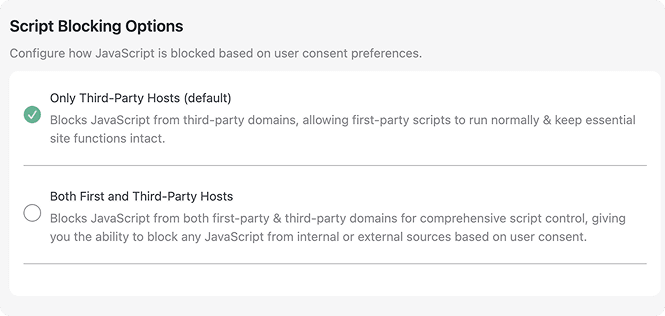
Blocks JavaScript from third-party domains, allowing first-party scripts to run normally, keeping essential site functions intact.




Blocks or removes scripts from running in the user's browser before consent is given. This method gives greater control over third-party services and tracking technologies that may not be tied to a specific plugin.
 Correct consent handling is required under GDPR and ePD 5(3), so keep your categories and script-blocking choices accurate and tested.
Note that AI Auto-Blocking works for plugins and scripts loaded through WordPress’ standard architecture. Scripts hardcoded in theme files are not detected and must be added to blocking rules manually


 One rigid blocking mode
 Choose blocking strengthRisk of essential features breakingProtect core featuresHidden scripts run earlyStop early JavaScriptLimited pre-consent controlAdapt to each clientNo per-site flexibilityFlexible enforcement
 Clear results
 Consistent behavior
 Honest timing
AesirX Consent Management Platform (CMP) for WordPress v1.3.0 release, introducing category-based and granular consent controls.
READ MORE




AesirX Script Blocking Options applies blocking based on the mode you select. In “Only Third-Party Hosts,” it stops external JavaScript from running before consent. In “Both First and Third-Party Hosts,” it prevents script-level pre-consent enforcement across all sources until the visitor opts in.
Plugin Shield blocks full plugins, and Domain/Path Blocking targets specific scripts by their URL. AesirX Script Blocking Options works at JavaScript execution level, controlling whether first-party or third-party scripts can run at all before consent. This creates a broader JavaScript privacy control layer across the site.
Yes, when the chosen mode prevents their scripts from running. If a pixel, SDK, or beacon relies on JavaScript, AesirX Script Blocking Options can block pixels, SDKs, beacons via script rules until the visitor accepts the category.
Use the stricter mode when a site requires full pre-consent control or when too many tracking tools load from first-party locations. This setting prevents script execution pre-consent on both internal and external sources, which is helpful for sensitive or regulated web journeys.
AesirX Script Blocking Options can stop JavaScript from running before consent, helping site owners apply selective JS blocking for GDPR compliance without overblocking essential features. It does not guarantee compliance, but it supports consent-first behavior aligned with GDPR and ePrivacy Directive 5(3).


The evolution of Aesir is Aesir +  (the Norse symbol for Necessity)"Needed in order to achieve a particular result"
♥Join the AesirX Privacy Newsletter. Stay Informed. Stay Compliant.