

DPO Radio

GLOBAL PRIVACY CONTROL (GPC)
When a browser sends a GPC signal, AesirX CMP prevents optional tracking from loading and treats the signal as an opt-out or declined consent based on region.


Visitors increasingly expect websites to honour privacy choices across devices and browsers. Tools like Global Privacy Control (GPC) express those preferences automatically, without requiring a visitor to click a button or review a banner. Yet many sites still ignore GPC signals, apply inconsistent tracking, or require manual opt-out processes. This leads to unwanted data collection, fractured user journeys, and technical debt because teams must retrofit behaviour on every project.
Global Privacy Control (GPC) in AesirX CMP recognises when a visitor’s browser sends a GPC signal and applies an immediate opt-out for non-essential tracking. In regions that require opt-in, the signal is treated as a refusal of consent. AesirX updates the interface to reflect this state and relies on a small file placed in the site’s /.well-known folder so browsers know the website supports GPC, without any action from the user.
For organisations working across jurisdictions, this removes guesswork and manual setup. GPC becomes a predictable trigger, so optional tracking disables itself wherever the browser supports the signal, without requiring any separate consent flow.
Built for organizations where data protection meets performance

Applies GPC-driven opt-outs without duplicating consent setups.

Stops remarketing tags when GPC signals arrive.

Disables optional tracking when privacy tools are active.

Responds to reader browser privacy signals instantly.

Reduces optional tracking without user steps.

Blocks optional scripts when GPC tools request privacy.

Supports browser-based opt-out mechanisms at source.

Removes optional tags for travellers using GPC-enabled browsers.
Uses browser GPC signals to trigger opt-out and requires a gpc.json policy file




AesirX CMP applies GPC signals before any optional tracking loads. In regions that use an opt-out model, the signal works as an immediate opt-out. In regions that require opt-in, it is treated as a refusal of consent. Optional scripts never start, and the interface reflects this choice automatically. A small file in the site’s .well-known folder lets supported browsers recognise that the website honours GPC without any user action.
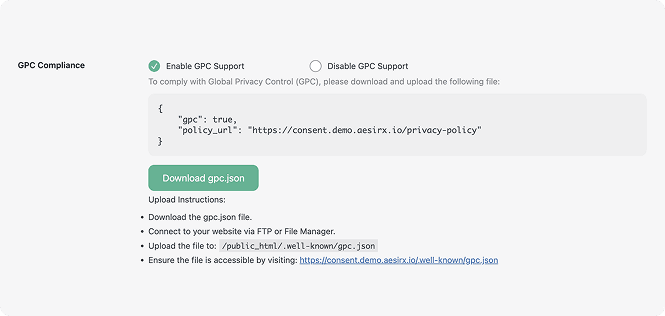
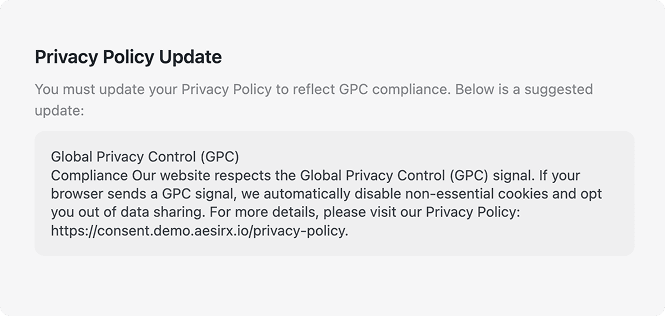
 Test with a GPC-enabled browser extension to confirm the interface shifts to opt-out without clicking your consent banner.
Note that AI Auto-Blocking works for plugins and scripts loaded through WordPress’ standard architecture. Scripts hardcoded in theme files are not detected and must be added to blocking rules manually


 No recognition of browser privacy tools
 Honours browser privacy flagsManual opt-outs required per visitorStops optional tracking on loadOptional tracking runs despite signalsUpdates USP API automaticallyInconsistent regional behaviourPredictable signal-driven behaviourHard to manage across frameworksSimplifies privacy handling at scale
 Signal-based behaviour
 Consistent opt-out state
 Recognised privacy signals
AesirX CMP for WordPress v1.4.0 adds Global Privacy Control (GPC) support, enabling automatic opt-outs and stronger compliance with global privacy laws.
READ MORE




Privacy signals can differ between visitors, devices, and browsers. AesirX uses GPC to apply opt-out behaviour consistently wherever supported, removing the need to build separate consent rules or maintain exceptions.
Once enabled, AesirX handles GPC signals automatically. Optional tracking is disabled at the browser level, so implementers do not need to adjust tags, modify firing rules, or maintain a separate logic path for privacy-aware users.
Manual opt-outs rely on user interaction and UI placement. AesirX interprets browser signals directly, applying opt-out behaviour before scripts run, reducing the risk of accidental tracking or misaligned tag activation.
Yes. When GPC is active, AesirX updates U.S. privacy signals used by compatible platforms. This aligns tracking behaviour with the visitor’s stated preference, helping avoid inconsistent states across analytics and ad tooling.
Once deployed, AesirX handles GPC behaviour the same way everywhere. Teams avoid re-architecting privacy logic per site, maintain a single implementation standard, and reduce the risk of compliance drift during updates.


The evolution of Aesir is Aesir +  (the Norse symbol for Necessity)"Needed in order to achieve a particular result"
♥Join the AesirX Privacy Newsletter. Stay Informed. Stay Compliant.